What is a water damage limit?
A water damage limit caps what the policy will pay for certain water losses. In Florida, some policies use a limit that is much lower than the dwelling limit.
Quick answers
Sudden leaks versus long-term seepage: which one gets paid
Every HO-3 or HO-B policy sold in Florida draws the same basic line: damage from water that escapes suddenly and accidentally is treated as a covered loss, while damage that built up gradually over weeks, months or years is treated as a maintenance failure and excluded. A pipe that bursts overnight and floods a kitchen is the textbook sudden loss. A roof flashing that has been letting a slow trickle of water into the attic for the better part of a year, leaving a ceiling stain that grew a little at a time, is the textbook example of what carriers call constant or repeated seepage. Most policies exclude it outright, on the theory that ongoing maintenance would have caught it.
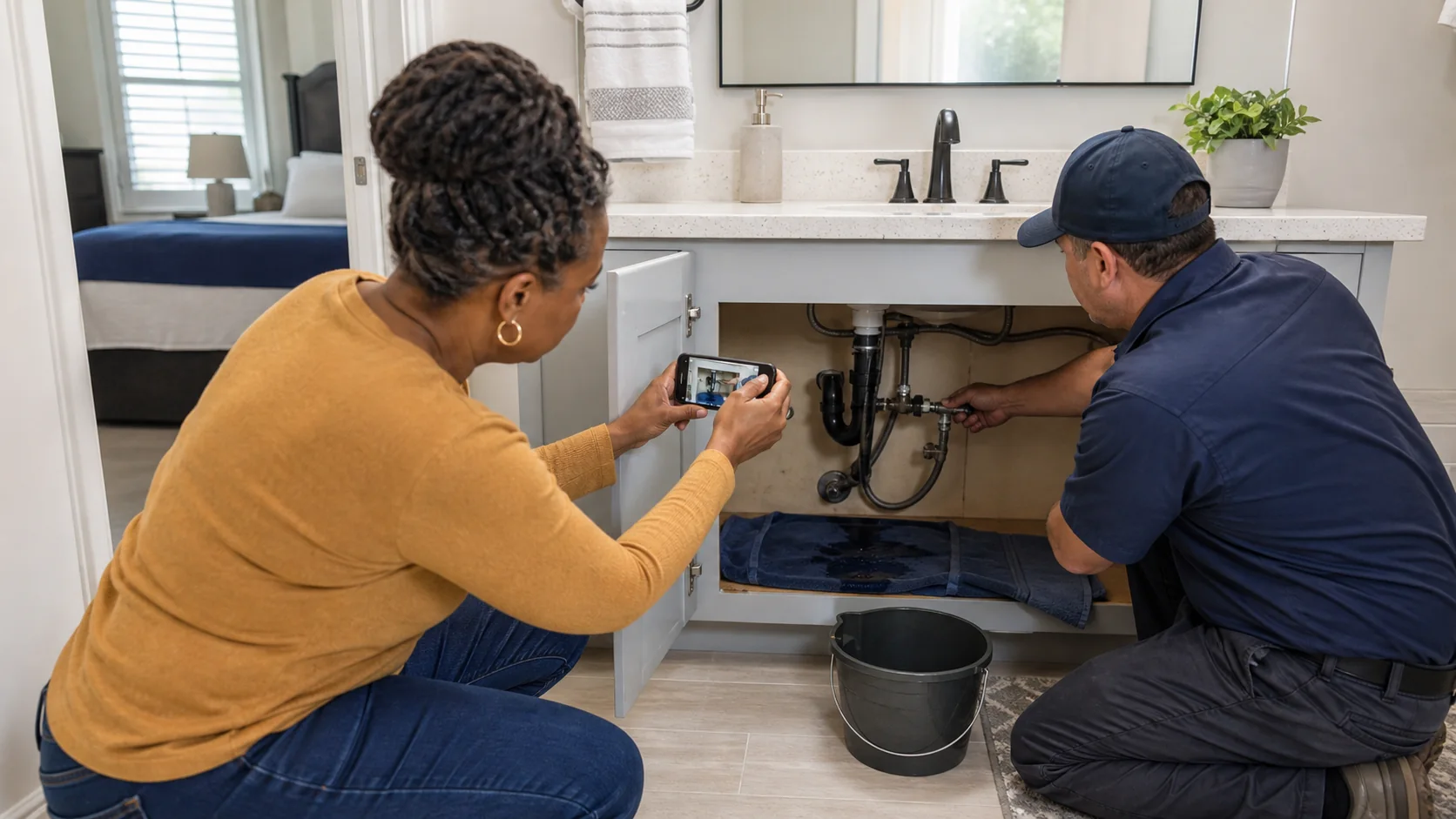
The practical problem is that a homeowner rarely knows which category their leak falls into until an adjuster or a moisture-mapping inspection says so. A single visible stain can be the tail end of either scenario: a sudden storm-driven intrusion that only became visible after it dried, or the latest evidence of a slow leak that has been running for a long time. Adjusters look at things like the moisture pattern behind the drywall, whether there’s evidence of prior staining or repair, humidity readings inside the wall cavity, and how long the underlying material shows signs of saturation. Because the seepage exclusion is one of the most litigated provisions in Florida property claims, it’s worth documenting the first time you notice a stain. Date it, photograph it, and report it promptly rather than waiting to see if it gets worse. A delayed report can itself be read as evidence of a longer-running problem.
What a water damage limit is, and how it caps what you recover
Separately from whether a loss is covered at all, most Florida homeowners policies now carry a water damage limit: a sublimit, distinct from your overall dwelling coverage, that caps how much the carrier will pay for non-weather-related water damage regardless of what the repair costs. Citizens Property Insurance was among the first Florida carriers to write this limit into its policies, and in the years since, a large number of private carriers followed with similar language of their own. The figure that shows up most often in Florida policies and in state consumer-advocate warnings is $10,000 per water damage occurrence. The exact number, and whether water removal, tear-out, and mold remediation are folded into the same cap or broken into their own sub-caps, varies by carrier and by policy form. Some policies stack a mold or fungi sublimit (commonly in the $1,000 to $10,000 range) on top of the water sublimit. A loss that involves both drying out the structure and remediating mold growth can burn through a combined cap of $15,000 to $20,000, while the actual repair bill runs well past that.
This limit applies specifically to non-weather water damage: a burst supply line, a failed water heater, a leaking toilet supply valve, a slab leak. It’s a distinct concept from the water backup sublimit that applies to sewer and drain backups, covered in more detail on our Water Backup page. It’s also distinct from mold coverage itself, which has its own limits and triggers discussed on the Mold Coverage page. Many carriers sell a buy-back endorsement (sometimes called full water damage coverage, as opposed to the limited or basic version) that removes or substantially raises the flat cap, typically for an additional premium in the low hundreds of dollars a year. Whether that endorsement is available to you at all often depends on the age and material of your home’s plumbing, which is discussed further below.
Why the roof repair and the resulting water damage are settled separately
When a leaking roof causes a stained ceiling, the carrier is really evaluating two different claims under one policy. The first is the roof itself: is the leak the result of a covered peril, such as wind lifting shingles during a named storm, or is it ordinary wear, such as cracked sealant, aged underlayment, or a roof reaching the end of its service life? Age-related roof deterioration is excluded on essentially every Florida homeowners policy as a maintenance issue. The cost of replacing or repairing a worn roof is the homeowner’s responsibility, unless a specific covered peril caused the failure. Our Roof Leaks page goes into more depth on how carriers evaluate roof age and condition against a leak claim, including the role of roof-age underwriting rules that many Florida carriers now apply at the time a policy is written or renewed.
The second, separate question is the interior water damage the leak produced: the ceiling stain, the soaked insulation, the resulting mold. If the roof failure itself traces back to a covered peril like wind, the resulting interior water damage is generally treated as part of that same covered loss. It isn’t subject to the non-weather water damage sublimit described above. It’s paid out under the dwelling and contents coverage that applies to storm losses, subject to your regular deductible (and, for a hurricane, your separate hurricane deductible). But if the roof failure is deemed an excluded maintenance issue, the resulting interior water damage is typically denied right along with it. The reasoning: damage flowing from an uncovered cause isn’t a covered loss either, even though the visible symptom, a stained ceiling, looks identical from the homeowner’s side of the drywall.
What a rain-driven leak has to look like to be treated as a covered loss
For a roof leak to be paid as wind or storm damage rather than denied as wear, carriers generally look for physical evidence that ties the water intrusion to a specific weather event rather than to gradual deterioration. That typically includes visible wind damage to the roof covering itself (missing, torn, or creased shingles, lifted tile, or displaced flashing) located at or near the point where water entered the attic or ceiling cavity. Adjusters also look at timing: a leak that first appeared during or immediately after a documented storm with recorded wind speeds in your area is much easier to tie to that event than one that surfaced on a calm day. Matching interior staining patterns to a specific roof penetration, rather than diffuse staining across an older roof with no clear point of entry, also supports a storm-driven finding.
Homeowners can help their own case by photographing roof damage from the ground (or having a licensed roofer document it) as soon as possible after a storm, before repairs begin, and by reporting the claim promptly rather than waiting. A roofer’s or public adjuster’s written opinion on cause of loss, and any available wind data for your address and the date in question, both become part of the evidence the carrier and, if it comes to that, an appraiser or a court will weigh. A roof that was already old and showing wear before the storm complicates this: carriers sometimes argue that pre-existing deterioration, not the storm, was the actual or contributing cause, which is one reason roof age and condition come up so often in these claims.
What Florida carriers ask about your roof and plumbing before writing full water coverage
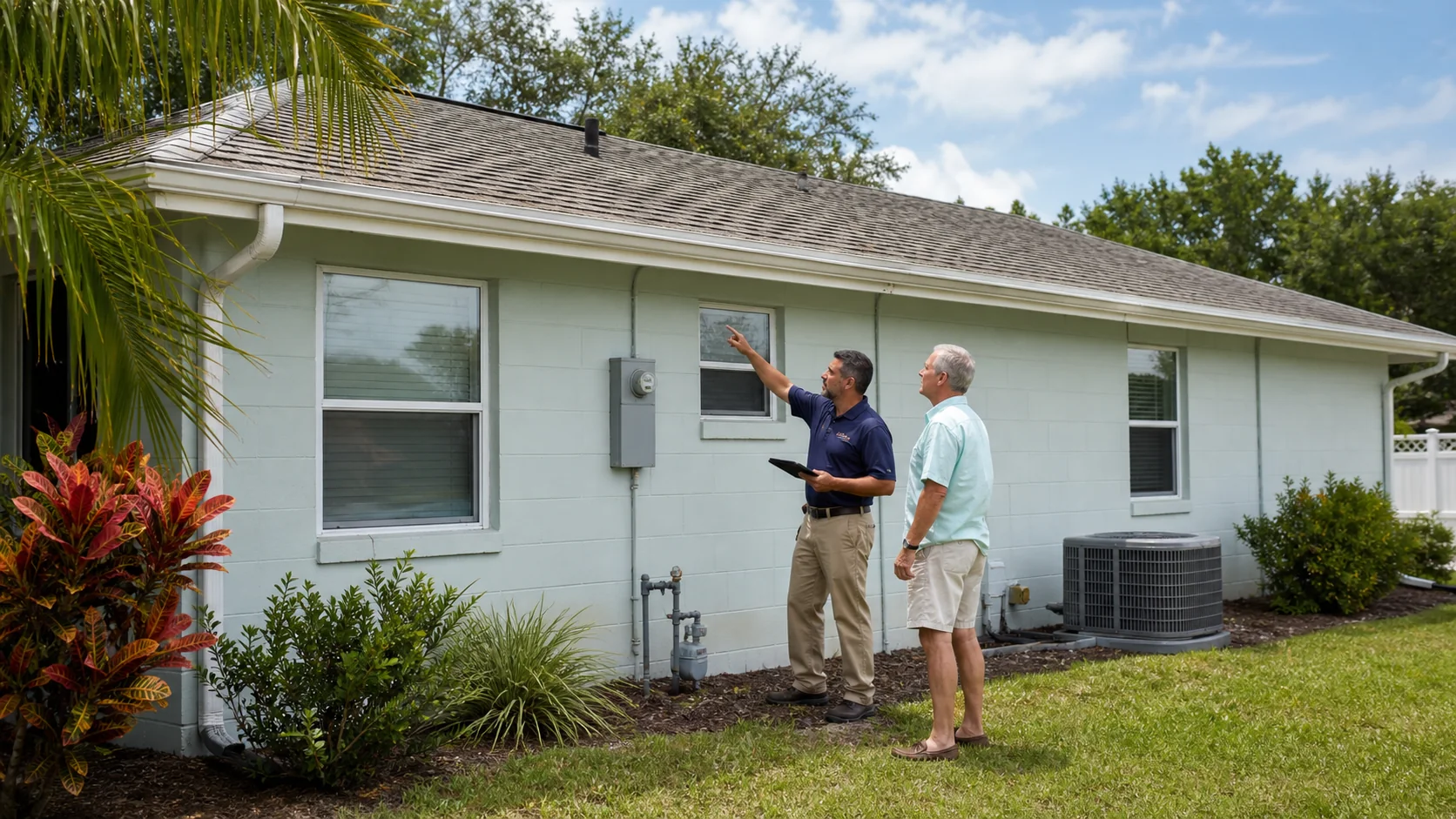
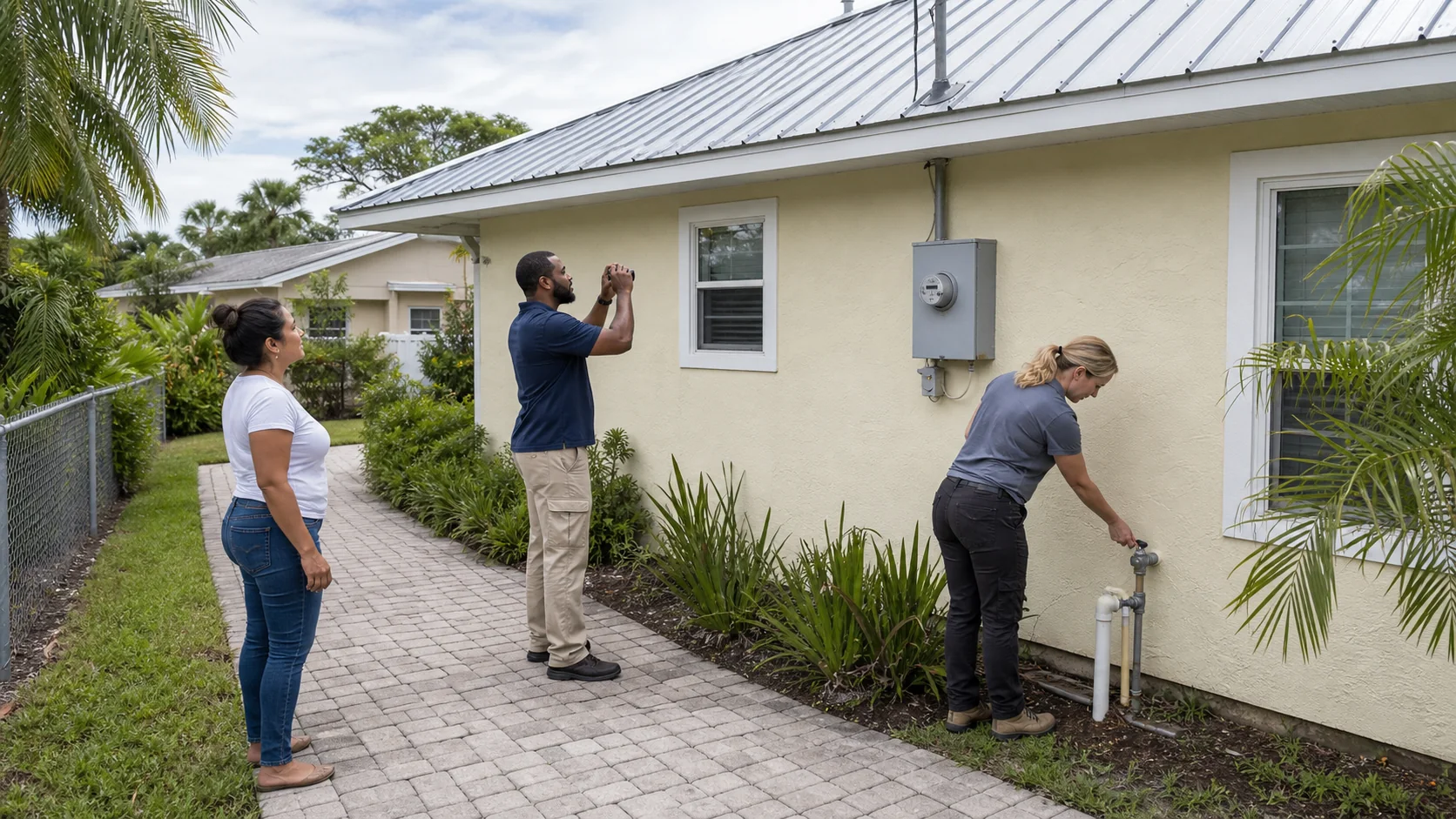
Because non-weather water losses (plumbing failures, appliance leaks, slab leaks) have driven so much claims activity in Florida over the past several years, carriers now underwrite the water damage limit itself almost the way they underwrite the policy as a whole. A four-point inspection (covering roof, electrical, plumbing and HVAC condition) is standard practice for writing or renewing a policy on an older home. The plumbing findings specifically influence whether full (non-sublimited) water coverage is even offered. Homes with polybutylene supply piping (common in construction from the late 1970s through the mid-1990s), lead pipe, or galvanized steel supply lines in a home over roughly 40 years old tend to be written with the limited water damage cap only, if the carrier will write the risk at all. Some carriers decline outright or require the piping be replaced first. Copper, CPVC and PEX are generally treated as acceptable materials that don’t trigger the same restriction. Cast iron drain lines showing visible corrosion or documented prior leak history raise similar flags.
Roof condition factors in separately but on the same inspection. A roof past a carrier’s age threshold, or one showing granule loss, cracked tiles, or deferred maintenance, can affect whether wind coverage applies cleanly and the overall terms the carrier is willing to offer, including whether roof coverage is written at actual cash value rather than replacement cost. Homeowners looking to qualify for full water coverage, rather than the limited version, generally improve their odds by replacing known problem piping before applying, keeping four-point inspection documentation current, and addressing roof deficiencies flagged on a prior inspection rather than letting them carry forward to renewal.
What a water claim does to your renewal
A paid water damage claim, even a small one settled well within the sublimit, is one of the more common triggers for a Florida non-renewal notice. Carriers track water losses on a property (and, through claims databases, on a homeowner) closely, and a second water claim within a few years is treated very differently from a first. It’s common for a carrier to non-renew rather than raise the premium, particularly if the claim exposed an underlying condition (old polybutylene piping, a corroded cast iron drain, a roof near the end of its rated life) that the carrier isn’t willing to keep insuring without repairs. Some carriers will offer renewal contingent on the homeowner fixing the underlying cause (repiping a bathroom, replacing a water heater, patching or replacing the roof) within a set window, documented by a follow-up inspection.
If you’ve filed a water claim and want to protect your ability to renew or to shop the policy elsewhere afterward, keep your own file: the cause-of-loss determination, repair invoices, and any inspection report showing the underlying issue was fixed, not just patched. That paperwork is often what lets a new carrier write you at standard rates rather than treating the prior claim as an open-ended red flag. If you do end up non-renewed, our Eligibility Tables section covers which carriers are generally more or less tolerant of a recent water claim on the CLUE report.
Frequently asked questions
Does the water damage limit apply to hurricane or named-storm flooding?
No. The water damage limit discussed here applies to non-weather water damage: plumbing and appliance failures, not storm-driven water. Wind-driven rain entering through storm-damaged roofing or windows is adjusted as part of the storm claim, not against this sublimit. Rising flood water is excluded from homeowners policies entirely and requires separate flood insurance.
Is $10,000 the same figure on every Florida policy?
No. It’s the figure that shows up most often in the limited/basic version of this coverage across Florida carriers, but the exact cap, and whether mold remediation and water removal are folded into it or given their own separate sub-caps, varies by carrier and policy form. Check your declarations page and any water damage or “limited water damage” endorsement for your specific number.
Can I remove the water damage limit entirely?
Many carriers offer a buy-back or full water damage endorsement that removes the flat sublimit and pays up to your dwelling coverage limit instead, usually for an added premium. Availability typically depends on your plumbing material, age and inspection results, discussed above.
If my roof claim is denied as wear, is the interior water damage automatically denied too?
Usually, yes, because the interior damage is treated as flowing from the same excluded cause. That’s a separate outcome from a case where the roof failure itself is tied to a covered peril like wind, in which case the resulting interior water damage is typically covered under the same claim.
Does a water claim always lead to non-renewal?
Not always, but it’s one of the more common triggers, especially for a second water loss or a claim that exposed a known plumbing or roof issue. Carriers vary widely in how they respond; some raise premiums or require repairs instead of non-renewing outright.
How is this different from the water backup sublimit?
The water damage limit discussed on this page applies to non-weather water damage generally: a burst pipe, a failed water heater. Water backup coverage is a distinct, separately-triggered coverage for water or sewage that backs up through a drain or sump pump, with its own sublimit; see our Water Backup page.
 Need a specific insurance company?
Get a quote from your Florida-licensed agent
Share a few details about your home, and our team will follow up to review your request and explain the next step.
- Florida-licensed agent
- Help with all property types
- No obligation
- Quotes typically back within 24 to 48 hours