Home insurance checklist when buying a Florida home
Check insurance before the final days of closing. A roof, wiring, plumbing, or flood issue can affect both the policy and the loan.
Quick answers
Before you make an offer: what should you check about the house?
A handful of facts about a property can make it cheap to insure, expensive to insure, or hard to insure at all. They are worth checking before you’re under contract, not after. Roof age is the single biggest factor: many Florida carriers give closer review to a roof older than roughly 15-20 years and often ask for a recent inspection, and an older roof may not qualify under some programs. Ask the listing agent for the roof’s install date and permit, if available.
Ask the seller whether they’ll share the home’s claims history. A CLUE (Comprehensive Loss Underwriting Exchange) report shows the property’s insurance claims for roughly the past seven years, and several open water or roof claims on a home, even ones the seller didn’t personally file, can push carriers to decline it or price it higher. Sellers aren’t required to hand this over, but many will if asked, since it also helps them price the sale.
Confirm the flood zone using FEMA’s flood map service before you fall in love with a house. Flood insurance is separate from homeowners insurance and is often required by the lender in high-risk zones; a property in an AE or VE zone can add a meaningful recurring cost that isn’t reflected in the homeowners quote alone. Finally, ask about known insurability red flags for the home’s age and construction: polybutylene or galvanized plumbing, an older fuse-based or federal pacific electrical panel, and knob-and-tube wiring are all things a number of carriers either decline or require replaced before binding a policy.
Under contract: which inspections does the insurance side need, and when?
Once you’re under contract, three inspections typically feed into the insurance process, and it’s worth scheduling them early so there’s time to act on what they find. A general home inspection covers the property broadly and often surfaces the roof, plumbing, and electrical issues that matter most to underwriters. Get this done as soon as your contract allows, since its findings can affect both your ability to get insured and your negotiating position with the seller.
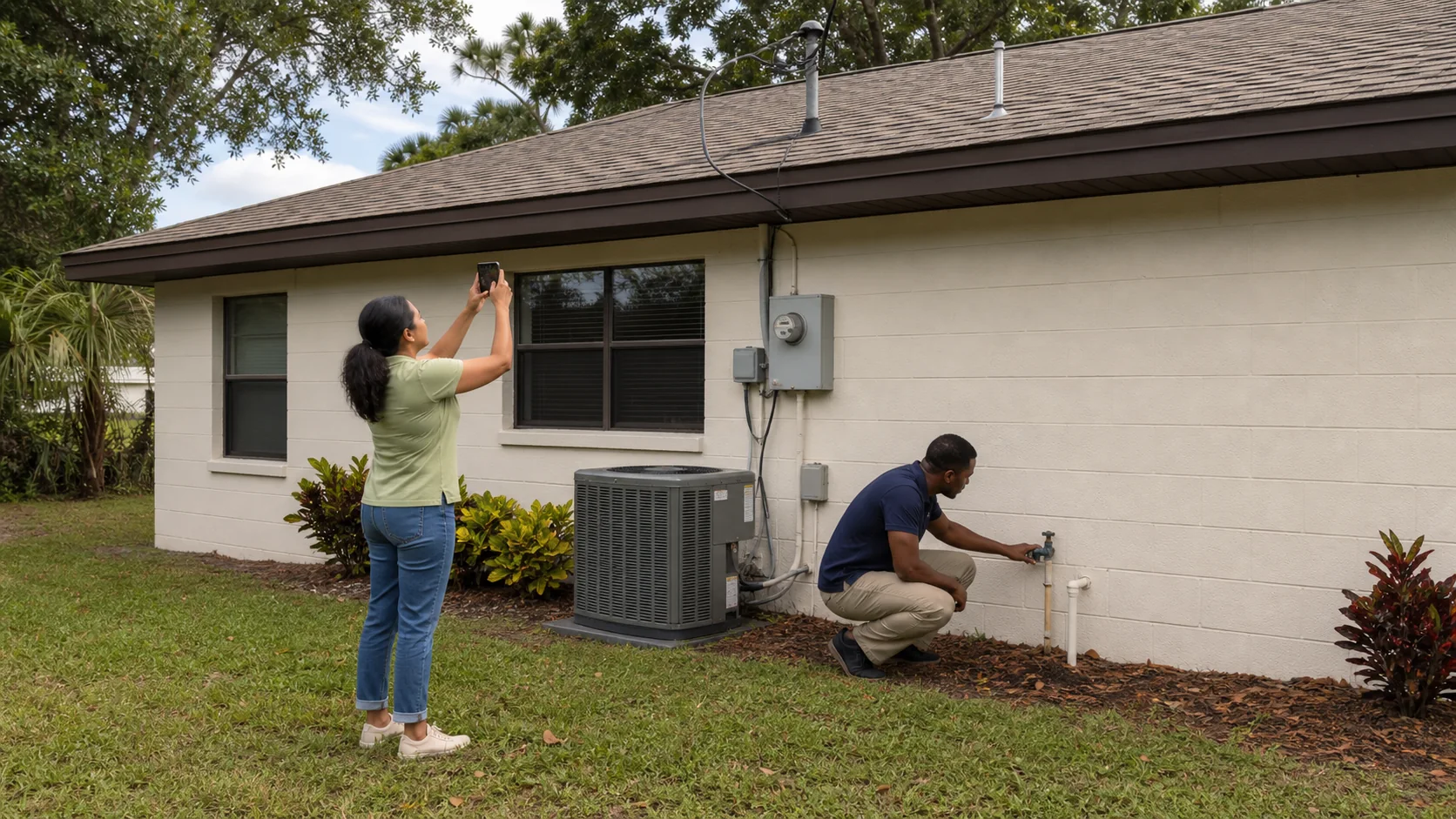
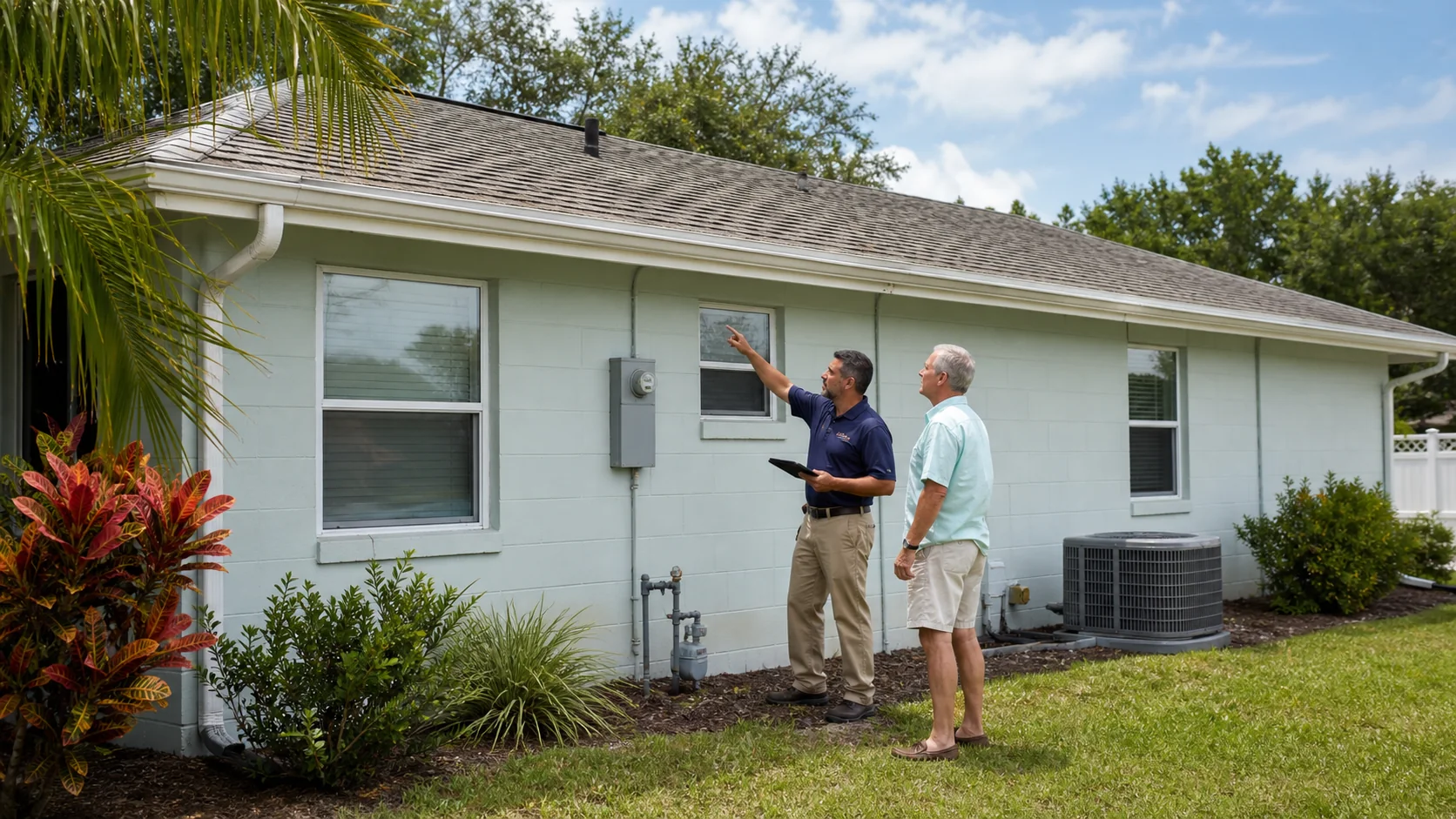
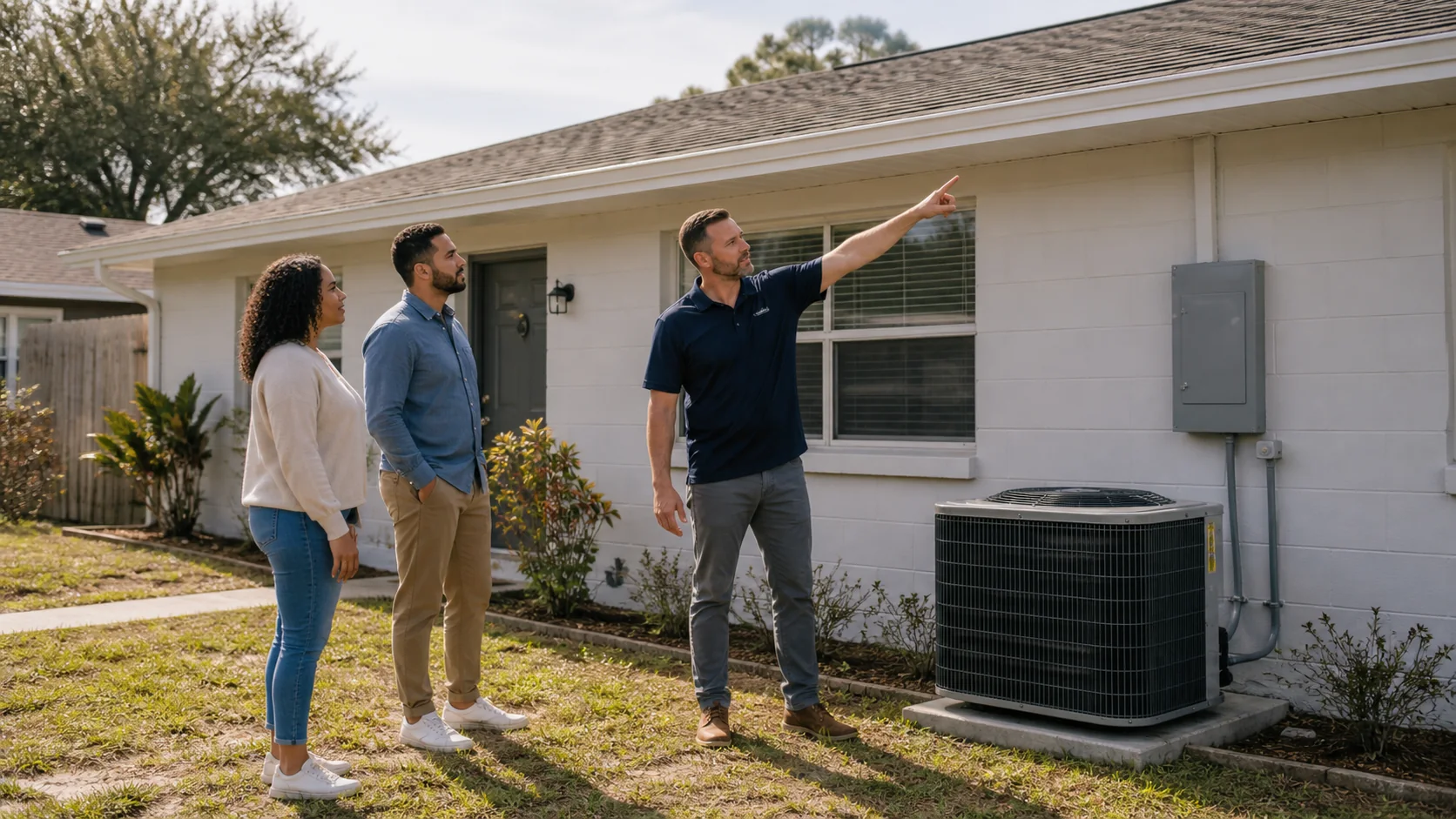
If the home is roughly 20 years old or older, expect to need a four-point inspection, which examines just four systems: roof, electrical, plumbing, and HVAC. Most Florida insurers require one on older homes before they’ll issue a policy, and it’s a separate, shorter inspection from the general home inspection: a licensed inspector or contractor typically performs it. A wind mitigation inspection is optional but usually worth doing regardless of the home’s age: it documents features like a hip roof, impact windows, or a secondary water barrier that qualify the home for premium credits, sometimes substantial ones, on the wind portion of the policy.
What documents will the lender and title company ask for?
Lenders and title companies need to see that adequate insurance will be in force before they’ll fund the loan, and they typically ask for three things. First, proof of insurance in the form of an insurance binder from the carrier, which confirms coverage is set to take effect at closing and states the dwelling coverage amount, deductibles, and policy period. Second, a paid receipt or invoice showing that the first year’s premium (or the portion due at closing) has been paid, not just quoted. Third, the policy has to name a mortgagee clause identifying the lender as loss payee. This protects the lender’s financial interest in the property and is a standard, non-negotiable line item your insurance agent will add once they have your loan information.
Is “hazard insurance” on the loan estimate the same thing as homeowners insurance?
Yes, in practical terms. On a loan estimate or closing disclosure, “hazard insurance” is simply the lender’s line-item name for the dwelling (structural) coverage already built into your homeowners policy. You don’t buy a separate hazard insurance product alongside it. Lenders budget for it as its own escrow line because they’re isolating the cost of protecting the structure from taxes and other escrowed items, not because it’s a second policy. See our Hazard Insurance guide for a fuller explanation, including what’s covered and what isn’t.
How does the premium land in your escrow payment?
At closing, you typically pay the full first year’s homeowners premium up front, along with an initial deposit into an escrow (impound) account, often a couple of months’ worth of insurance and property tax payments, held as a cushion. From then on, your mortgage servicer collects roughly one-twelfth of the estimated annual premium as part of each monthly mortgage payment, holds it in escrow, and pays the insurer directly when the policy renews each year. If your premium rises at renewal, which is common for Florida homeowners policies, your servicer will adjust your monthly escrow payment and may run an escrow analysis that asks for a shortage payment to cover the gap.
What has to be in place by closing day?
By closing, your homeowners policy needs to be bound (meaning the insurer has confirmed coverage starts on or before the closing date) with dwelling coverage that meets or exceeds your lender’s minimum (usually the loan amount or the home’s replacement cost, whichever is used in underwriting). The policy needs the correct mortgagee clause naming your lender, the first year’s premium needs to be paid or included in the funds you’re bringing to closing, and if the property is in a mapped flood zone, a separate flood policy needs to be bound as well. Bring your insurance agent’s contact information and the binder to closing, since title companies frequently confirm details directly with the carrier before funds are disbursed.
Frequently asked questions
How far before closing should I start shopping for homeowners insurance?
As soon as you’re under contract and know the home’s roof age, construction type, and claims history. Quotes can take longer than expected if a four-point inspection or additional underwriting information is needed, so starting early avoids a last-minute scramble.
Can I close without homeowners insurance in place?
No. Lenders require proof of insurance and, typically, proof the premium is paid before they’ll fund the loan, since the home is their collateral.
Does the seller’s insurance policy transfer to me?
No. Homeowners policies don’t transfer with the sale; you need your own policy bound in your name effective at or before closing, even if you’re keeping the same carrier the seller used.
What if the home fails a four-point inspection?
Carriers may decline to write the policy, require the flagged item (often an old roof or panel) be repaired or replaced first, or offer coverage with exclusions. This is why scheduling the inspection early in the contract period matters. It leaves time to negotiate repairs with the seller if needed.
Is flood insurance included in my homeowners policy?
No. Flood damage is excluded from standard homeowners policies and requires a separate flood policy, which is commonly required by the lender if the home sits in a mapped flood zone.
Why did my required escrow deposit at closing seem larger than one month’s premium?
Lenders commonly collect a cushion of several months of insurance (and tax) payments upfront to build a buffer in the escrow account, in addition to the full first year’s premium paid separately. This is standard and not specific to any one lender.
 Need a specific insurance company?
Get a quote from your Florida-licensed agent
Share a few details about your home, and our team will follow up to review your request and explain the next step.
- Florida-licensed agent
- Help with all property types
- No obligation
- Quotes typically back within 24 to 48 hours