Who may qualify for Citizens insurance?
Citizens may be available when a Florida-authorized insurer will not offer coverage, or when an eligible private offer costs more than 20% above the cost of similar Citizens coverage. This is only the first test. The home, applicant, policy type, and needed records must also meet current Citizens rules.
Quick answers
What does Florida law say about who Citizens is allowed to insure?
Citizens operates under Fla. Stat. §627.351(6), which sets it up as an insurer of last resort for applicants who are “entitled, but, in good faith, are unable to procure insurance through the voluntary market.” That standard is deliberately narrow. Citizens is not meant to compete with private carriers on price alone, only to backstop homeowners the private market won’t take at a comparable rate.
The statute also caps how much home Citizens will insure. For personal lines residential structures, a dwelling with a replacement cost of $700,000 or more is generally ineligible (a threshold that has applied since January 1, 2017). The one exception: in counties the state has designated as lacking reasonable market competition, that cap rises to $1 million in replacement cost. Homes in wind-borne debris regions valued at $750,000 or more must also carry opening protections (impact-rated windows, shutters, or similar) that meet the Florida Building Code, and newly constructed or substantially improved structures seaward of the state’s coastal construction control line are not eligible at all.
How does a private-market offer affect an application?
Before Citizens will bind or renew a policy, the application runs through a comparison process (Citizens calls this the clearinghouse) that checks whether an Office of Insurance Regulation-approved private carrier will offer comparable coverage. If a private insurer will write the risk at a premium that is not more than 20% higher than the equivalent Citizens premium, the applicant is not eligible for Citizens and is expected to take the private offer instead. Citizens only becomes an option when no authorized insurer will write the property, or when every available private offer exceeds the Citizens premium by more than that 20% margin.
This comparison isn’t limited to new applications. Existing Citizens policyholders can also receive a qualifying private offer during their policy term through Citizens’ depopulation (also called takeout) program. If an approved private insurer’s offer falls within that same comparability band, Citizens can non-renew the policyholder into the private market at their next renewal, moving the risk off of Citizens’ books. Policyholders are notified before this happens and can review the specific offer through the tools Citizens and their agent make available.
Which inspections and forms come up during a Citizens application?
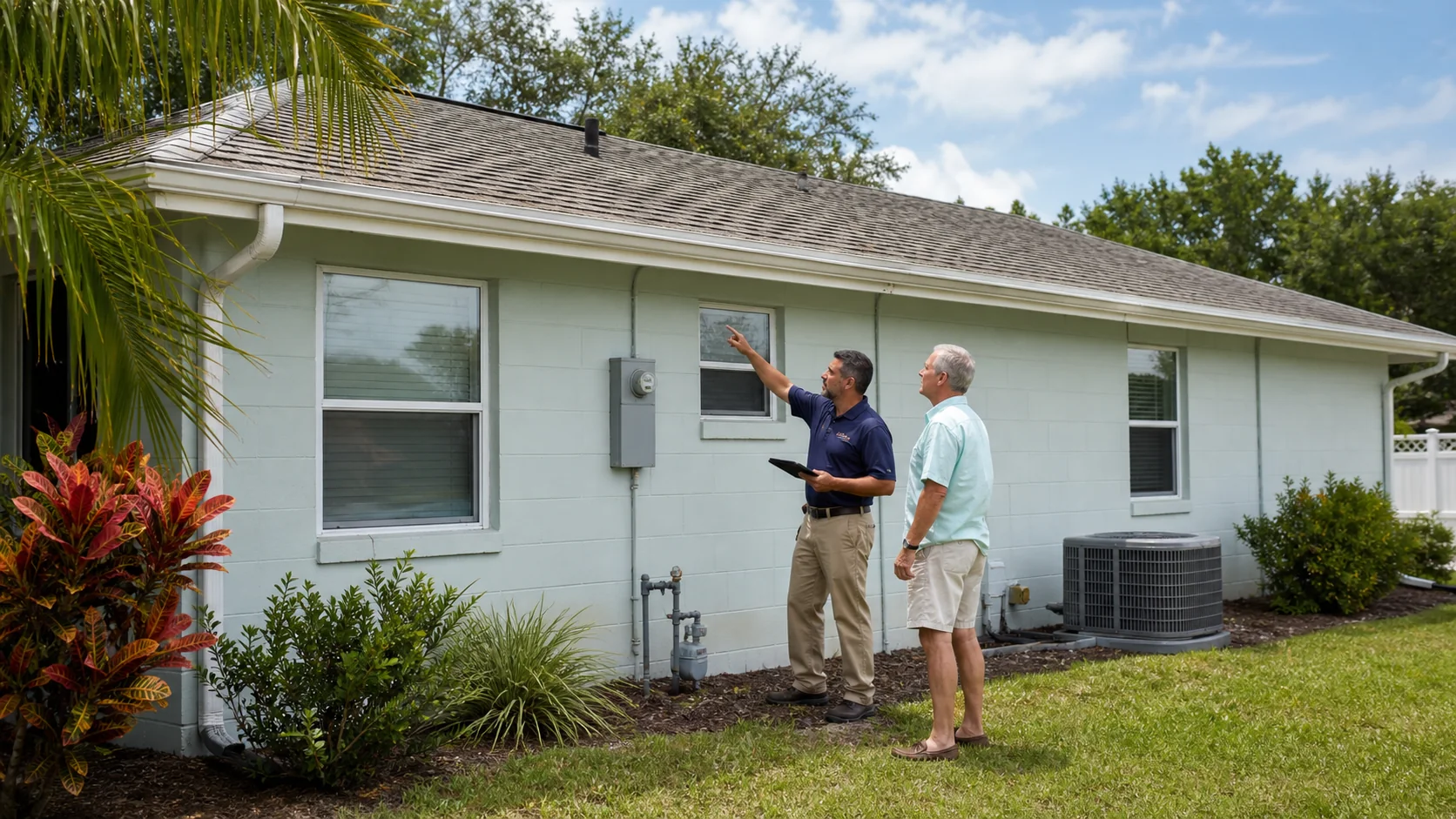
Most Citizens applications involve at least one inspection, and which ones apply depends on the age and condition of the home. A four-point inspection, covering the electrical system, plumbing, HVAC, and roof, is required for property owner, dwelling, and mobile home applications on homes older than 20 years. It’s used to determine eligibility rather than just to set a discount. A separate roof condition inspection kicks in based on roof age and material: soft roofs (shingle and similar) over 25 years old and hard roofs (tile, slate, metal, or concrete) over 50 years old must be inspected to confirm at least five years of remaining useful life, or the application needs documentation that the roof has been replaced.
A wind-mitigation inspection is different in kind. It’s voluntary and affects premium discounts only, not whether the home is eligible in the first place. A sinkhole inspection is required only if the homeowner is requesting optional sinkhole loss coverage under certain conditions. Citizens can also order an underwriting field survey at any point during the policy term, at no cost to the policyholder, to verify replacement cost and property condition; these can be exterior-only or interior-and-exterior depending on what Citizens needs to confirm.
How do roof age and plumbing type enter the conversation?
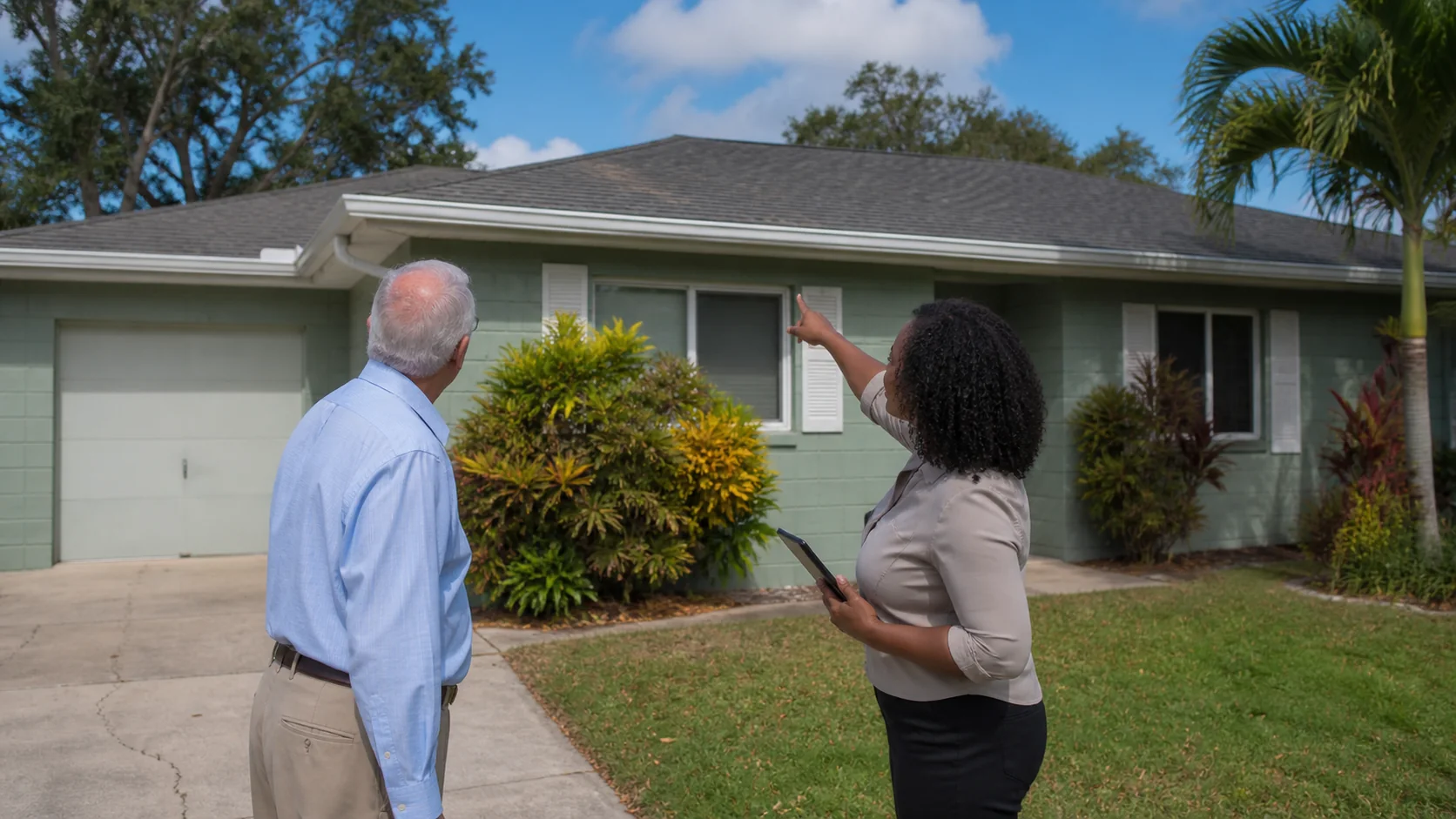
Roof age is one of the more common eligibility issues, for the reasons described above: a soft roof past 25 years or a hard roof past 50 years has to clear the roof condition inspection’s five-year remaining-life standard, or the homeowner needs to document a replacement before Citizens will issue the policy. This mirrors the roof-age scrutiny that’s become standard across Florida’s private homeowners market, which is often what pushes an older home toward Citizens in the first place.
Plumbing type matters too, specifically for polybutylene piping. Under Citizens’ underwriting rules (Rule 206.B, effective for policies with effective dates on or after February 1, 2022), new-business applications on homes 20 years or older with polybutylene piping are not insurable by Citizens, on both the HO-3 and HO-8 forms. As with roof age, this tracks how private carriers already treat polybutylene, along with galvanized steel and certain cast-iron plumbing, as a red flag. So a home with older polybutylene lines can face the same plumbing-related obstacle whether the applicant is shopping the private market or applying to Citizens.
What is wind-only eligibility, and who does it apply to?
Wind-only is a legacy Citizens product, not something available statewide. It’s limited to properties in areas that were eligible for coverage from the former Florida Windstorm Underwriting Association (FWUA) as those areas were defined on January 1, 2002, in practice specific coastal and other high-risk zones rather than entire counties. A wind-only policy covers windstorm and hail only; the homeowner still needs a separate policy, typically from a private carrier, for the other perils (fire, theft, liability, and so on), which is why Citizens describes it as a quota-share arrangement between itself and an authorized insurer.
Because eligibility is tied to the specific property rather than a broad geographic label, Citizens publishes an address-lookup tool on its wind-only eligibility page so a homeowner can check a given property directly rather than guessing based on ZIP code or county.
What are your options after a private carrier non-renews you?
The statute’s good-faith requirement means the expected first step is shopping the voluntary market, not going straight to Citizens. If that shopping comes up empty or every offer runs more than 20% above the comparable Citizens premium, the applicant becomes eligible to apply directly to Citizens. Along the way, Citizens points consumers toward the Florida Market Assistance Plan (FMAP), which is designed to connect homeowners with private-market alternatives when initial shopping doesn’t turn up an offer, and toward its CHOICES tool, which provides comparative rate data by county so a homeowner can see what carriers are active and roughly how they price in their area before assuming Citizens is the only option.
It’s also worth knowing that landing on Citizens after a non-renewal isn’t necessarily permanent. Because Citizens continues to run new applicants and existing policyholders through the same comparability check, a private insurer that later re-enters the area or improves its offer can trigger a depopulation (takeout) offer, moving the policy back into the private market at a subsequent renewal.
Frequently asked questions
Does having a Citizens policy now stop a private insurer from taking over my policy later?
No. Citizens runs an ongoing depopulation (takeout) program, and if an Office of Insurance Regulation-approved private insurer offers you comparable coverage within the statutory comparability band, Citizens can non-renew your policy into that private offer at your next renewal.
Is there a dollar limit on how much home Citizens will insure?
Yes. Personal lines residential structures with a replacement cost of $700,000 or more are generally ineligible, a threshold in place since January 1, 2017. In counties the state has designated as lacking reasonable market competition, that cap is raised to $1 million.
Will an old roof automatically disqualify a home from Citizens?
Not automatically, but it does trigger the roof condition inspection: soft roofs over 25 years old and hard roofs over 50 years old must show at least five years of remaining useful life, or the homeowner needs to document a roof replacement before Citizens will issue the policy.
Does Citizens cover homes with polybutylene plumbing?
Only if the home is under 20 years old. New-business applications on homes 20 years or older with polybutylene piping are not insurable by Citizens under its current underwriting rules (Rule 206.B, effective for policies dated on or after February 1, 2022).
What’s the difference between a wind-only Citizens policy and a standard homeowners policy?
A wind-only policy covers windstorm and hail only, and is limited to properties in areas that were eligible for the former Florida Windstorm Underwriting Association as of January 1, 2002; the homeowner needs a separate policy for other perils. A standard Citizens homeowners policy covers the full range of listed perils in one policy and isn’t restricted to those legacy areas.
How do I know if a private offer is “close enough” to my Citizens premium to affect my eligibility?
The statutory test is whether the private premium is more than 20% higher than the comparable Citizens premium. Citizens and its clearinghouse process run this comparison during application and renewal, so homeowners don’t need to calculate it themselves, but an agent can walk through the specific offer with you.
Questions about your options? Talk to a licensed agent.
FloridaHomeInsurances.com is operated by a Florida-licensed insurance agency and is not affiliated with, sponsored by, or endorsed by Citizens Property Insurance Corporation. Citizens eligibility and underwriting decisions are made solely by Citizens.