What should I do after home damage?
Protect people first. Stop more damage when it is safe, then report the loss to the carrier as soon as you can.
Quick answers
Sourced from Florida Statutes § 627.70131 and Florida DFS homeowners guidance. Last verified: August 2026.
What Should You Do First After a Loss?
Start by making sure everyone in the home is safe, then take reasonable steps to prevent further damage: covering an open roof section, extracting standing water, or shutting off water at the source. Most Florida homeowners policies include a duty to mitigate further loss, and failing to take reasonable steps can give a carrier grounds to reduce what it pays for damage that got worse afterward. Keep every receipt for emergency supplies, tarps, or a restoration company, since those costs are often reimbursable as part of the claim.
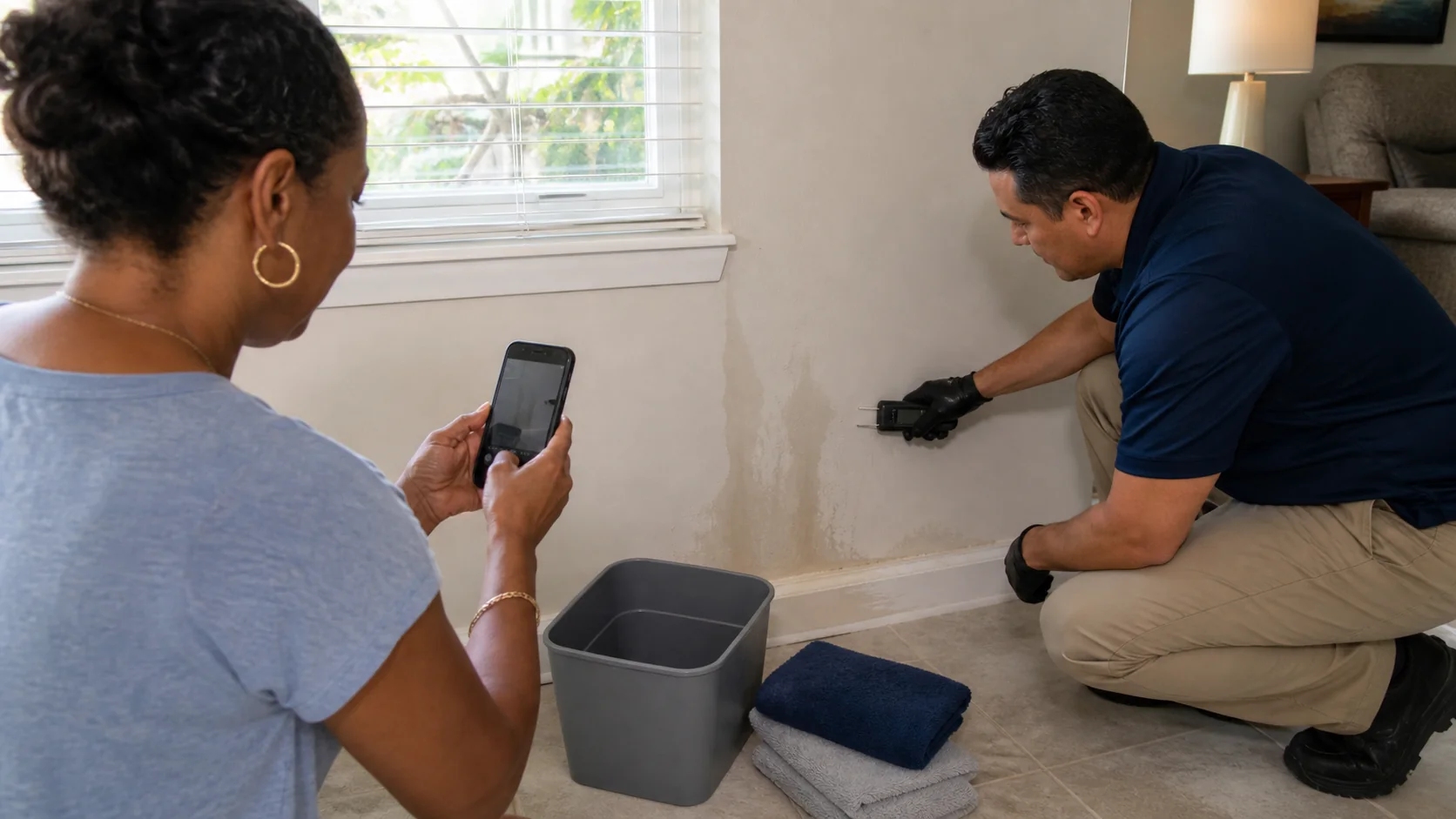
Before anything is moved, cleaned, or repaired, document everything: photograph and video the damage from multiple angles, and start a written timeline noting when the damage was discovered, what caused it, and who has been contacted so far (insurer, agent, mortgage company, contractor). This timeline becomes the backbone of the claim file and is often the first thing an adjuster, and later an attorney or appraiser, will ask to see if the claim is disputed.
If the loss involves a storm or heavy rain, check whether a separate flood policy applies. Most standard homeowners policies exclude flood damage entirely, so a loss caused primarily by rising water may need to go through a National Flood Insurance Program policy or a private flood carrier instead of, or alongside, the homeowners claim.
How Quickly Should You Report the Claim?
Most Florida homeowners policies require notice of a loss “as soon as practicable” or within a specific number of days, and Florida Statutes generally limit how long a policyholder has to file an initial claim after the date of loss, with shorter windows for reopened or supplemental claims. These statutory deadlines have been adjusted by the legislature in recent years, so confirm the current filing windows against your specific policy and current law rather than relying on a remembered figure.
Reporting promptly also starts the clock on the carrier’s own statutory response obligations. Florida Statutes § 627.70131 generally requires an insurer to acknowledge communications about a claim and begin an investigation within set timeframes after receiving notice, so a delayed report on the homeowner’s side pushes back when those protections start to apply.
Reporting late doesn’t automatically void a claim, but it can give the carrier an argument that the delay prejudiced its ability to investigate, for example, if evidence of the cause of loss degrades or disappears. When in doubt, report the loss and let the adjuster help sort out scope and cause, rather than waiting to confirm every detail first.
What Damage Should You Photograph and Preserve?
Photograph and video all visible damage from multiple angles: wide shots that show the damage in context, and close-ups that show the specific defect or point of failure. Do this before any repairs, cleanup, or discarding begins, and again once temporary repairs (like a tarp) are in place, so the file shows both the original damage and the mitigation work.
Where it’s safe to do so, keep damaged materials (flooring, drywall, cabinetry, roofing samples) until the adjuster has had a chance to review them in person or confirms in writing that they can be discarded. A carrier can dispute a claim’s scope or cause if the physical evidence is gone before it’s ever inspected, so when a full item can’t reasonably be kept, photograph it thoroughly and consider setting aside a representative sample.
It also helps to gather any pre-loss records that show the property’s condition beforehand: prior inspection reports, permits for recent work, even older listing or renovation photos. These can help establish that damage is new rather than pre-existing, which is one of the more common points carriers scrutinize.
Which Repairs Can You Make Before the Inspection?
Policies generally expect a homeowner to make reasonable temporary repairs to prevent further damage: tarping a roof, boarding a broken window, or extracting standing water and running fans to prevent mold growth. These are considered mitigation, and most policies require them; failing to make reasonable temporary repairs can reduce what a carrier ultimately pays if damage worsens as a result.
Permanent repairs (replacing the roof, refinishing floors, rebuilding a wall) are best held until after the adjuster has inspected the damage and the carrier has issued a scope of repairs, unless the home is genuinely unsafe to occupy in the meantime. Repairing before the inspection removes the physical evidence the adjuster needs to verify the claim, which can lead to disputes over scope or cause.
If a permanent repair truly can’t wait, document the pre-repair condition as thoroughly as possible first (photos, video, a contractor’s written assessment) and, where possible, notify the carrier that a repair is happening out of necessity, along with the reason.
How Should You Communicate With the Carrier and Adjuster?
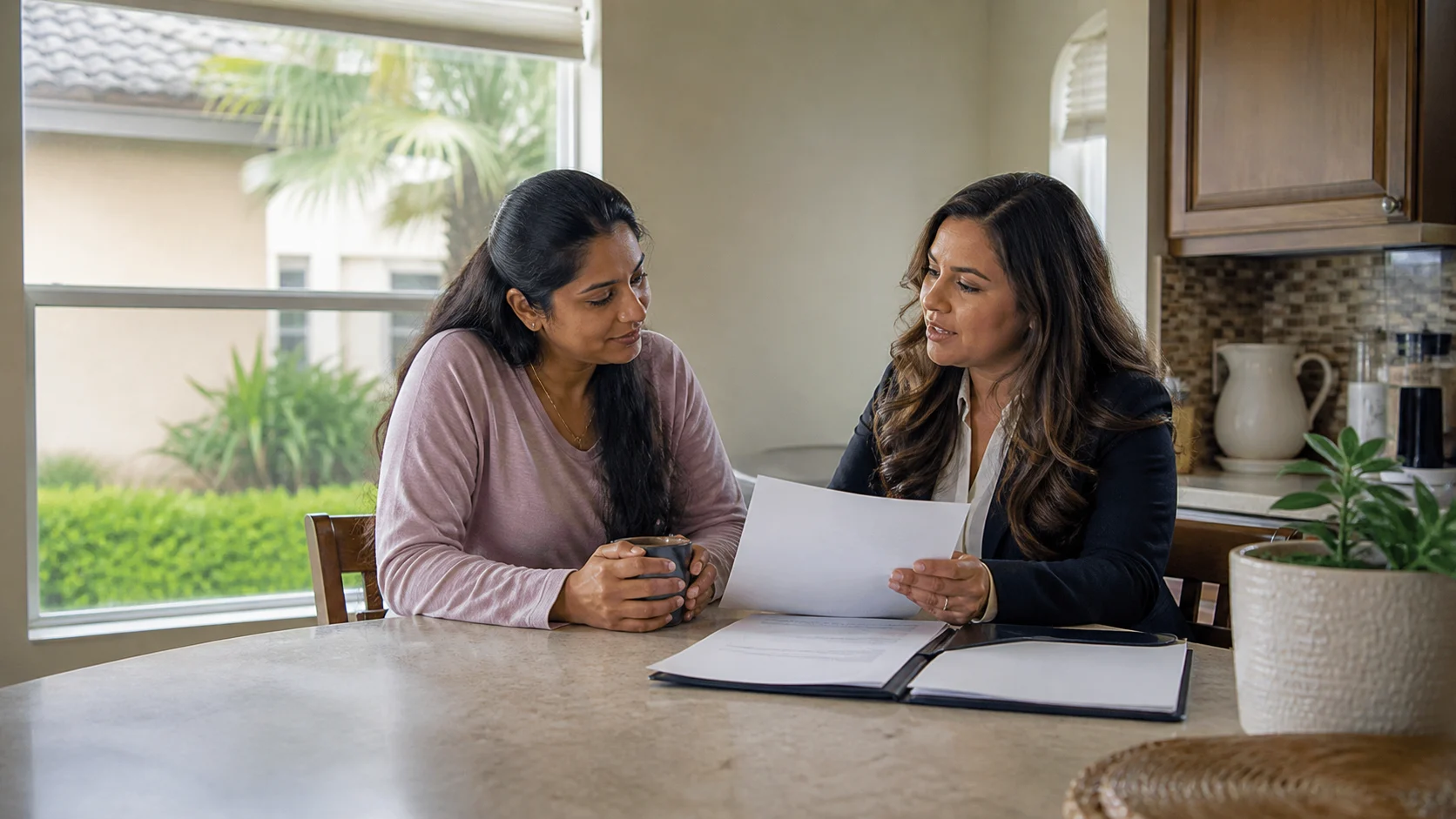
Keep a written record of every call and message: date, time, who you spoke with, and what was discussed or agreed to. Florida Statutes § 627.70131 requires insurers to acknowledge communications about a claim promptly and to document the claim’s handling, so your own parallel record helps confirm the timeline if there’s ever a dispute about what was said or when.
Following up important phone conversations with a short confirming email or portal message creates a paper trail inside the carrier’s own system, in addition to your personal notes. If an adjuster gives a verbal estimate, timeline, or instruction, ask for it in writing, or send a message summarizing your understanding and asking them to correct anything inaccurate.
Route substantive communication through the carrier or its assigned adjuster rather than solely through a contractor, public adjuster, or attorney acting on your behalf, unless you’ve formally authorized them to represent you on the claim: mixed or unclear representation can slow a claim’s handling.
What Happens During the Carrier Inspection?
An adjuster, either an employee of the carrier or an independent adjuster assigned to the claim, will typically inspect the property in person to document the damage, take measurements and photos, and estimate repair costs using standardized estimating software. In events affecting many homes at once, a carrier may use a mix of in-person and virtual or aerial-imagery inspections.
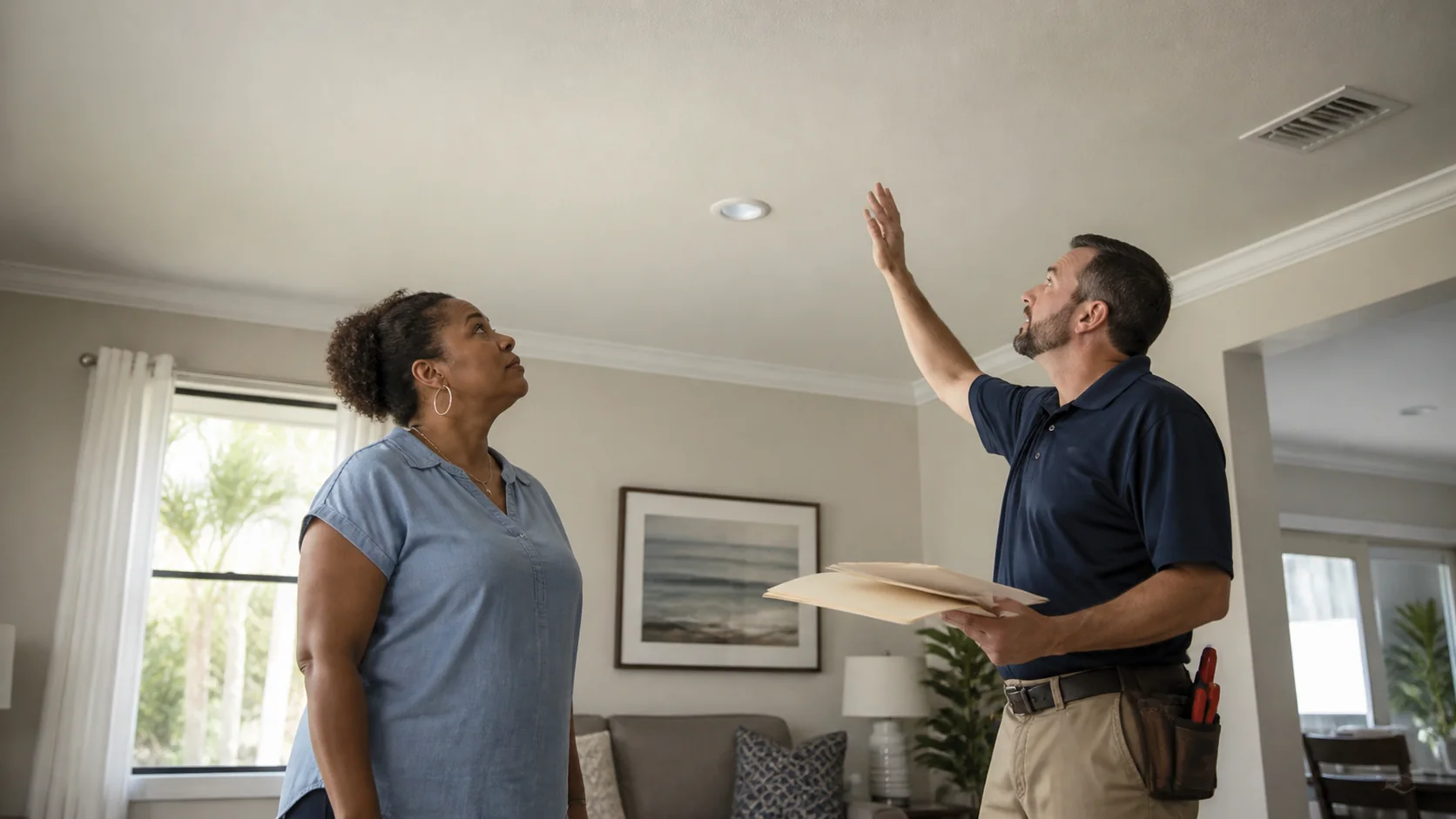
Being present for the inspection, and pointing out damage that may not be obvious (inside a wall cavity, under flooring, in an attic) generally helps make sure nothing is missed in the adjuster’s report. It’s reasonable to ask the adjuster to explain what they’re documenting and to request a copy of the estimate once it’s finalized.
If a homeowner’s own contractor estimate differs significantly from the carrier’s, that’s the normal point to raise it, either directly with the adjuster or through a supplemental claim, rather than assuming the first number is final. Estimates are frequently revised once additional damage is discovered during repairs.
Why Can a Closed Prior Claim Delay New Coverage?
Carriers review a property’s claims history, often through a C.L.U.E. (Comprehensive Loss Underwriting Exchange) report, as part of underwriting any new policy or renewal, and a recent prior claim can affect the outcome even after it’s fully paid and closed. This is separate from whether the claim was handled correctly; it reflects the carrier’s own risk assessment of a property with a claims history.
This is one reason accurate, complete claims history matters when requesting new quotes or switching carriers: an application that omits a prior claim can be treated as a misrepresentation if discovered later, which can jeopardize coverage at the worst possible time. See the prior claims eligibility guide for what several carriers publish about how many claims they’ll accept.
Certain claim types draw more underwriting scrutiny than others: water damage and roof claims in particular, since they can signal an ongoing maintenance issue rather than a one-time event. A single, clearly weather-related claim is generally viewed differently than a repeat water-damage claim at the same property.
What If You Disagree With the Claim Decision?
A homeowner who disagrees with a carrier’s decision (a denial, an underpayment, or a delay) generally has several options. These can include requesting a supervisor or manager review within the carrier, invoking any appraisal provision in the policy (a process where each side selects an appraiser and a neutral umpire resolves disagreements over the amount of loss), or filing a complaint with the Florida Department of Financial Services’ Division of Consumer Services.
Appraisal typically resolves disputes over the amount of a covered loss, not whether the loss is covered at all. A coverage denial is a different kind of dispute and may call for a formal complaint, mediation, or legal review instead. Florida also offers a mediation program through the Department of Financial Services for certain disputed residential property claims.
Keeping organized documentation throughout the claim (the timeline, photos, every written communication, and copies of estimates) makes any of these paths easier to pursue, since most of them require showing exactly what happened and when.
What Mistakes Commonly Create Claim Problems?
Common issues include reporting the loss late, making permanent repairs before the inspection, and not keeping records of communication with the carrier, each of which can give the carrier room to dispute timing, cause, or scope.
Signing an Assignment of Benefits (AOB) with a contractor without understanding it can also complicate a claim significantly. An AOB can transfer the homeowner’s right to payment, and sometimes the right to negotiate or dispute the claim, to the contractor, which can leave the homeowner out of the loop on their own claim. Florida law has significantly restricted new residential-property AOB contracts in recent years, but any arrangement offered at the point of an emergency repair should still be read carefully before signing.
Working with unlicensed contractors, especially storm-chasing offers made door-to-door right after a storm, is another common source of problems, since unlicensed work may not satisfy the carrier’s requirements and can create liability issues of its own. Confirm a contractor’s Florida license through the Department of Business and Professional Regulation before signing anything.
Frequently asked questions
How long does a homeowners insurance claim usually take in Florida?
There’s no single fixed timeline. It depends on the carrier, the type and size of the loss, and whether it’s part of a widespread catastrophe event. Florida law sets deadlines for insurers to acknowledge a claim, begin investigating, and pay or deny it once a complete proof of loss is submitted; those statutory windows have been adjusted by recent legislation, so confirm the current deadlines with the Florida Department of Financial Services or your policy documents rather than assuming a specific number of days.
Do I need a public adjuster?
Not always. A licensed public adjuster works for the homeowner, for a fee set by Florida law, and can be useful for large or disputed claims, but many straightforward claims are handled directly between the homeowner and the carrier’s adjuster without one. If a claim is denied, significantly underpaid, or unusually complex, a public adjuster or an attorney experienced in property claims is worth considering.
Can my policy be canceled for filing a claim?
Florida law limits when a carrier can cancel or non-renew a policy specifically because of claims history, particularly for a single weather-related claim, but it doesn’t prohibit non-renewal in every circumstance. Carriers can still decline to renew based on overall claims frequency or other underwriting factors at the normal renewal cycle. Review any non-renewal notice carefully and ask the carrier or DFS to explain the stated reason if it’s unclear.
 Need a specific insurance company?
Get a quote from your Florida-licensed agent
Share a few details about your home, and our team will follow up to review your request and explain the next step.
- Florida-licensed agent
- Help with all property types
- No obligation
- Quotes typically back within 24 to 48 hours