Four-point inspection checklist
A four-point report reviews four major home systems for insurance. It is not a full home inspection and does not promise carrier approval.
Quick answers
What should be accessible before the inspector arrives?
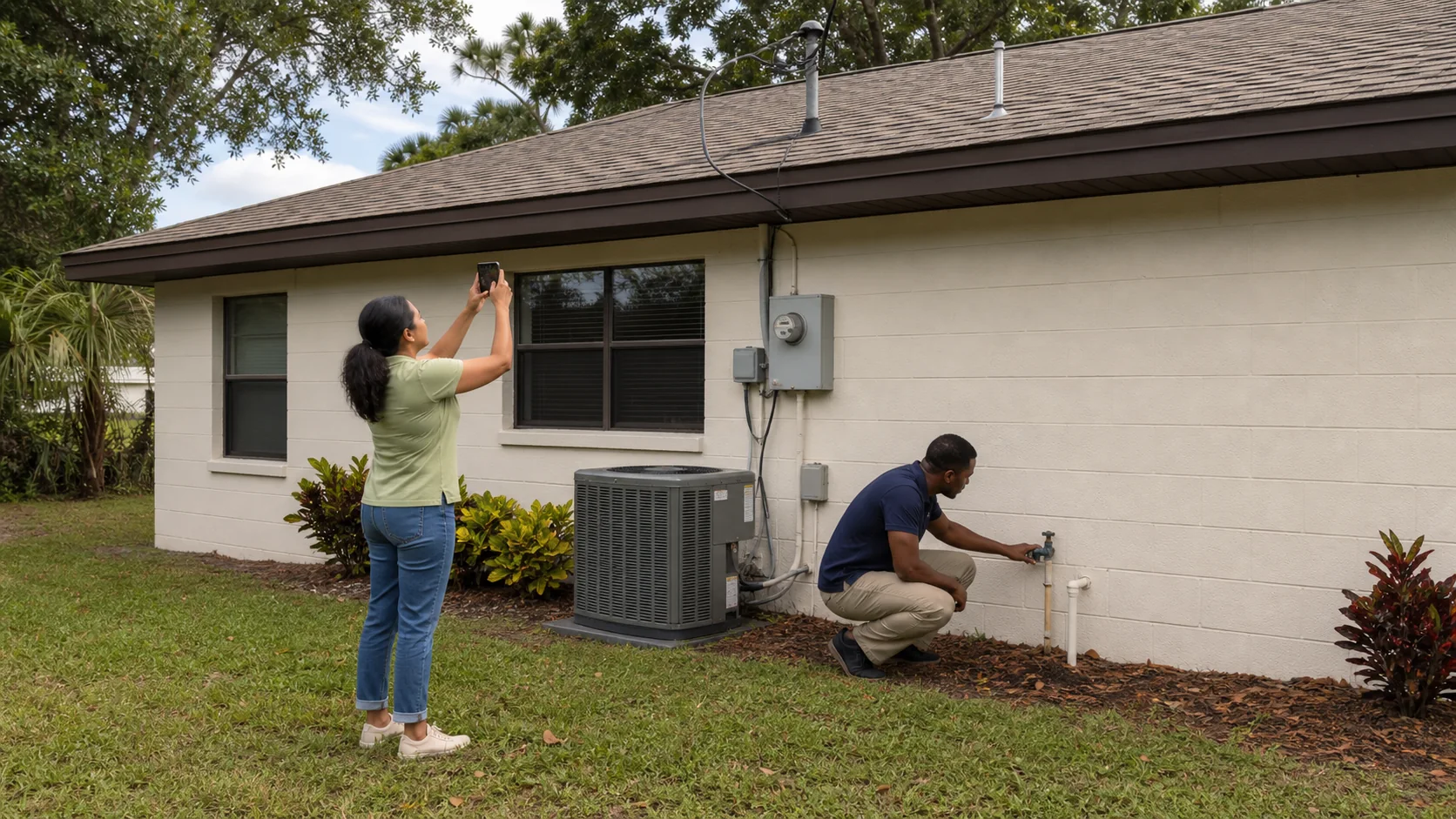
The inspector needs to physically see and photograph each system, so anything blocking access adds time or gets marked unable to verify. Clear a path to the electrical panel (move storage, furniture, or hanging items away from the panel door), make sure the attic hatch or access panel is reachable, and unlock any gates, sheds, or outbuildings with equipment inside. Under sinks in the kitchen and bathrooms should be clear enough to see the supply lines and shutoff valves, and the area around the water heater needs to be open on all sides. If the home is vacant or a tenant is present, arrange for someone with a key to be there, since most inspectors won’t force entry or reschedule without notice. Have any recent permits, roof replacement paperwork, or panel upgrade documentation on hand. It can support the age and condition the inspector records, and it sometimes shortens the remaining-life estimate the report gives your roof.
Roof: what gets recorded?
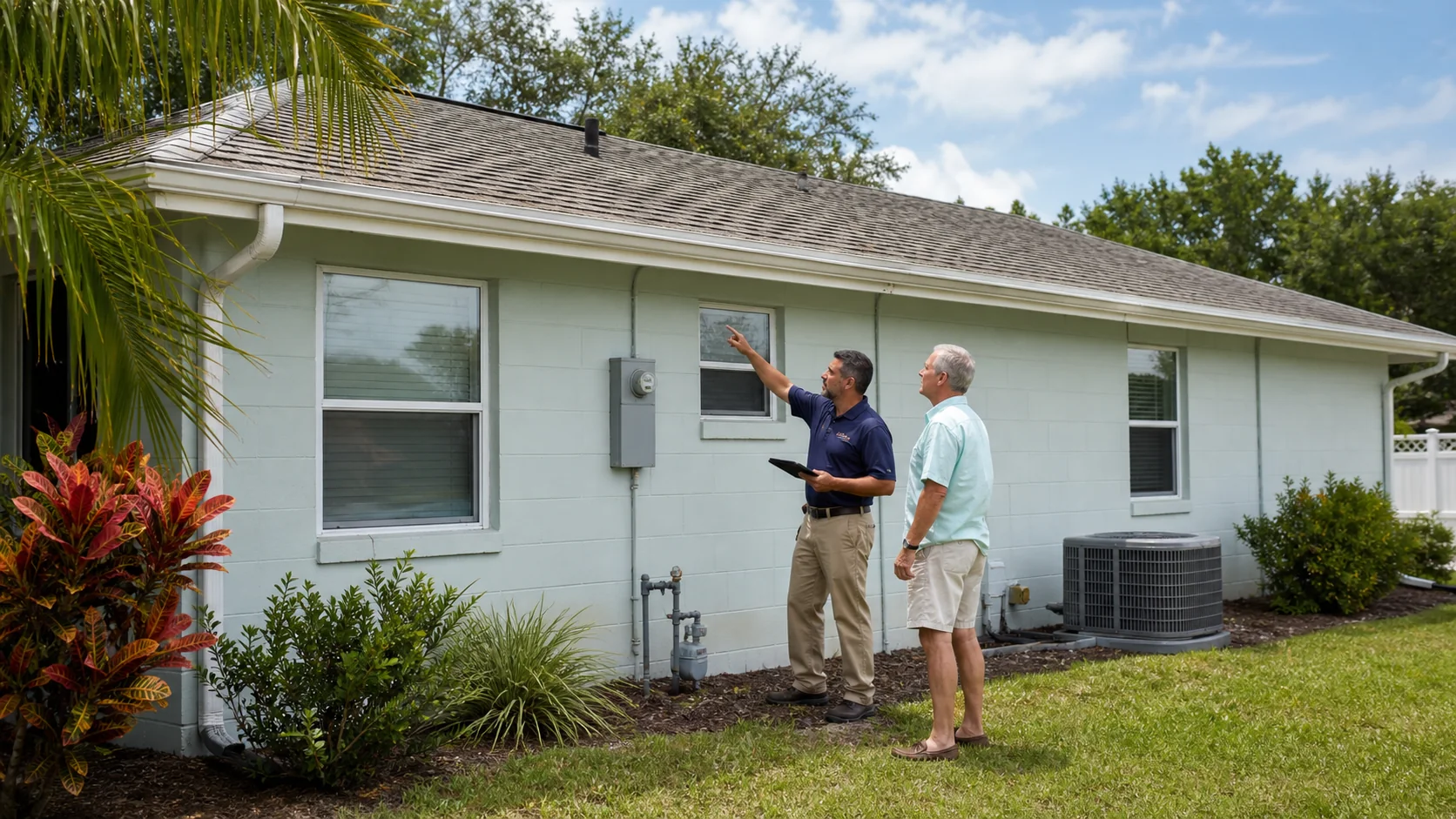
The inspector records the predominant roofing material (shingle, tile, metal, or flat/built-up), any secondary material, the roof’s age, and the date of the last permitted replacement or repair if known. They note visible damage (cracked or missing tiles, exposed fasteners, granule loss, ponding on flat sections) and whether there’s any visible sign of an active or past leak; if there is, the form requires them to describe it. The report also gives an overall condition rating and, for older roofs, an estimate of remaining useful life. Roofs made of soft materials (shingle) over roughly 25 years old and hard materials (tile, metal, slate, concrete) over roughly 50 years old typically need at least five years of documented remaining life for a carrier to accept the report as-is; a roof that can’t clear that bar is usually flagged for repair, partial replacement, or full replacement before a policy will be written.
Electrical: which panel and wiring details are written down?
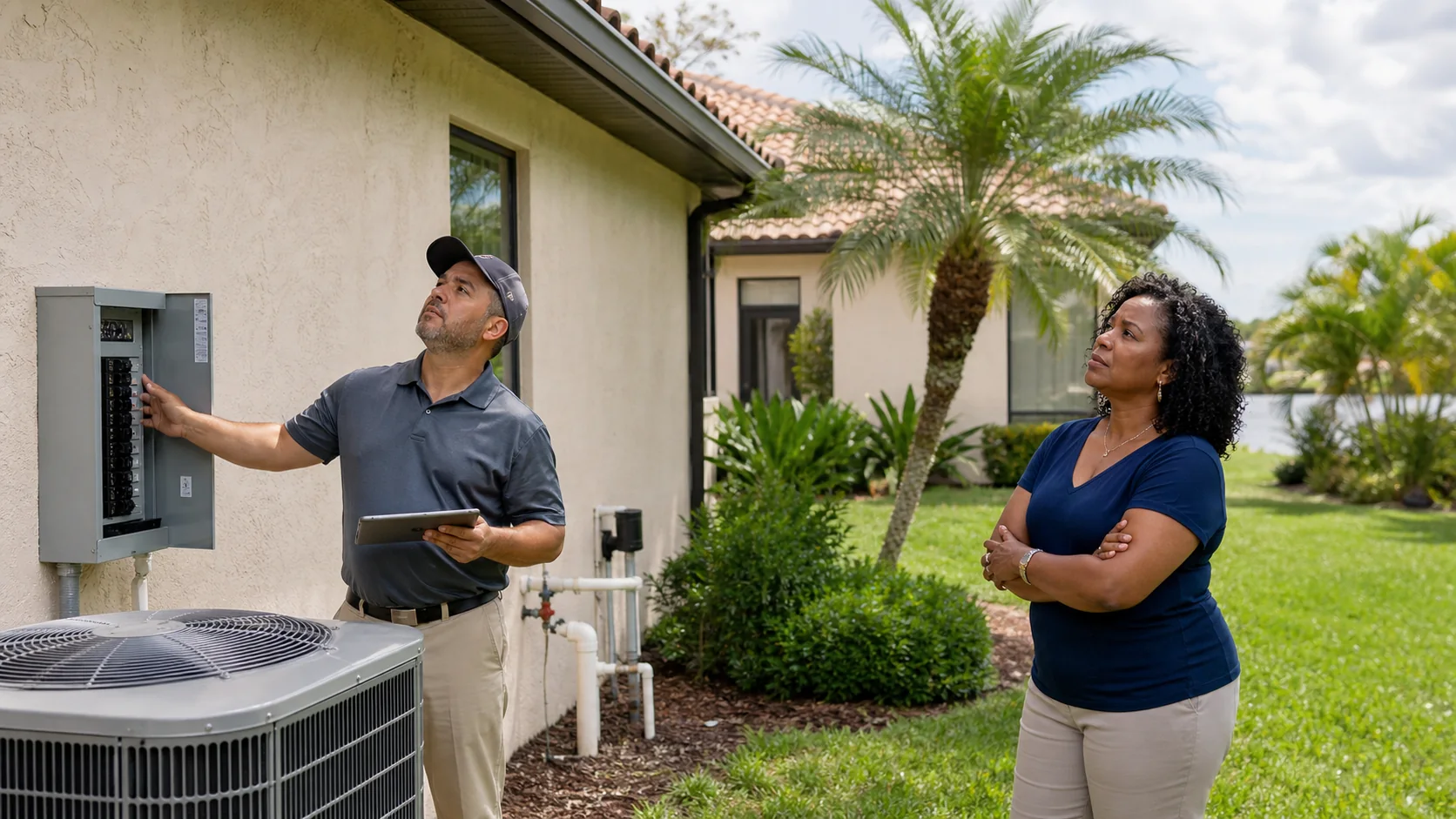
The inspector records the main panel’s type (fuse box or circuit breaker), its amperage, and the brand and model printed on the panel itself, along with a second panel’s details if the home has one. They document the wiring type (copper, aluminum, knob-and-tube, or cloth-wrapped) and note any hazards: blown fuses, breakers that trip repeatedly, empty breaker slots without covers, loose connections, double-tapped breakers, or exposed wiring. Panel brand matters beyond what’s printed on the form. Federal Pacific Stab-Lok and Zinsco panels are widely known fire-risk brands. The inspection report simply records what’s there, but many carriers use that brand alone to decline coverage or require replacement, regardless of how the panel is otherwise functioning. Homes with single-strand aluminum branch wiring now need a separate certification from a licensed electrician confirming it’s been properly remediated (pigtailed with approved connectors) before the report is considered complete.
Plumbing: what are they looking at under the sinks and at the water heater?
The inspector identifies the supply and drain pipe materials (copper, PVC, galvanized steel, or polybutylene) and notes the approximate age of the plumbing system and whether it’s been fully or partially re-piped. Polybutylene supply lines are the main red flag here: the material is prone to failure, and several carriers may not offer coverage until it is replaced or may apply a water-damage exclusion. The inspector also checks for active leaks or physical evidence of past leaks (staining, corrosion, warped cabinetry under a sink) and cracked or improperly supported connections. At the water heater, they record its age and condition and, as of the 2025 form update, must photograph the temperature-pressure relief (TPR) valve and its discharge line to confirm it’s installed correctly.
HVAC: what goes on the form?
The inspector notes whether the home has central air conditioning and heat, the age of the system, and the year of its most recent major update or replacement. If there’s no central system, they record the primary heat source and its fuel type instead. The form also flags secondary heat sources that carry their own risk: a wood-burning stove or gas fireplace has to be identified as professionally installed or not, and a home relying on portable space heaters as its main heat source is noted as a hazard. HVAC condition is generally the least likely of the four systems to sink an application on its own, but a non-functioning system or one well past its typical service life can still prompt a repair request.
What happens after the report reaches the carrier?
The inspector submits the completed report to you or directly to the agent/carrier, and underwriting reviews it alongside the rest of the application. The inspection doesn’t approve or deny coverage on its own. Serious hazards, most commonly exposed wiring, an active roof leak, a Federal Pacific or Zinsco panel, or polybutylene plumbing, are the items most likely to require repair or replacement before a carrier will bind a new policy or renew an existing one. Some carriers will issue coverage with a compliance deadline instead, giving you a window (commonly 30 to 60 days) to complete the repair and provide proof; others simply decline until the work is done and a new report is submitted. Passing a four-point inspection with no flagged items improves your odds but still doesn’t guarantee any specific carrier will offer a policy: the report documents condition, and each carrier’s underwriting guidelines decide what they’ll accept.
Frequently asked questions
Who orders and pays for a four-point inspection?
Typically the homeowner or applicant arranges it with a licensed home inspector or qualified contractor and pays for it out of pocket; carriers don’t send their own inspector or cover the cost.
Is a four-point inspection the same as a wind mitigation inspection?
No. A four-point inspection covers roof, electrical, plumbing, and HVAC condition; wind mitigation is a separate report (Florida form OIR-B1-1802) that documents features like roof-to-wall connections and opening protection to qualify for windstorm discounts. Inspectors often do both during the same visit, but they’re two different forms with two different purposes.
At what age does a home need a four-point inspection?
Citizens Property Insurance requires one for owner-occupied, dwelling, and mobile home applications on properties more than 20 years old. Private carriers set their own thresholds, and these vary by company: some start around 25 to 30 years, others wait longer. Ask your agent what the specific carrier requires before you schedule one.
How long is the report good for?
Most carriers accept a four-point report for about 12 months, but this isn’t universal: some set shorter windows for older homes or properties with previously flagged issues. Confirm the acceptance period with your agent or carrier before relying on an older report.
What if my roof doesn’t have five years of remaining life?
Carriers generally won’t bind or renew a policy on a roof reported with less than five years of remaining useful life without repair, partial replacement, or full replacement first. Some will quote coverage contingent on the work being completed by a set date.
Can I fix problems and get re-inspected instead of losing coverage?
Usually, yes. If the report flags something like exposed wiring or a leaking pipe, having it repaired by a licensed professional and getting an updated inspection (or a letter from the contractor) is generally enough to satisfy underwriting, though the exact process depends on the carrier.
 Need a specific insurance company?
Get a quote from your Florida-licensed agent
Share a few details about your home, and our team will follow up to review your request and explain the next step.
- Florida-licensed agent
- Help with all property types
- No obligation
- Quotes typically back within 24 to 48 hours