Does home insurance cover mold?
A home policy may cover limited mold cleanup when mold results from a covered sudden loss, such as a covered pipe break. Mold from long-term leaks, dampness, or poor upkeep is often not covered.
Quick answers
When is mold treated as part of a covered water loss, and when is it not?
Standard Florida homeowners policies do not treat mold as its own category of damage. Instead, the insurer asks a threshold question first: was the water that caused the mold itself the result of a covered peril? If a storm tears open a section of roofing and rain gets in before it can be patched, the resulting water damage, and any mold that grows out of it, is generally treated as part of that covered loss. The same logic applies to a pipe that bursts suddenly, a washing machine hose that fails, or an appliance that floods a room overnight. In each case the water intrusion was sudden and accidental, which is the standard most policies use to decide whether a loss is covered at all.
Mold is handled differently when the water source is gradual. A roof that has been seeping slowly for months, condensation from poor attic ventilation, plumbing that has been weeping behind a wall for a long period, or ordinary humidity are usually treated as maintenance issues rather than sudden losses. Most policies exclude damage from continuous or repeated seepage, and if the underlying water was never a covered event, the mold that grew from it is not covered either, no matter how the remediation estimate is worded. This is the most common reason mold claims get denied: the water damage that produced the mold was already excluded before mold ever entered the picture.
How are mold limits typically written on a Florida policy?
Even when the water loss is covered, most Florida HO-3 policies do not pay for mold remediation without a ceiling. Carriers commonly write a mold sub-limit: a separate cap, distinct from the dwelling coverage limit, that applies specifically to testing, removal, and remediation of mold, fungus, or wet rot. A cap in the neighborhood of $10,000 per occurrence is common on many Florida policies, and some carriers write it lower, closer to $5,000, particularly on older homes or homes with prior water losses. A number of insurers also offer a buy-up endorsement that raises the mold sub-limit for an additional premium, though availability and the higher limit offered both vary by carrier and are not universal.
Because this is a sub-limit and not an exclusion, it applies on top of, and separately from, any other cap already reducing the claim. A number of older Florida homes also carry a limited water damage endorsement that caps the underlying water loss itself, often cited around $10,000 as well, which is covered in detail on the site’s Water Damage Limit page. When both apply to the same claim, the two caps stack. The water damage portion of the repair is capped first, and mold remediation is capped again on top of that. That’s how a single burst-pipe claim can end up far short of covering the full cost of drying out a home and remediating the mold that followed. The exact figure on any individual policy is set in the declarations page and endorsement schedule, not in marketing material, so the only reliable number is the one printed on the policy itself.
Why the cause of the water decides the mold answer
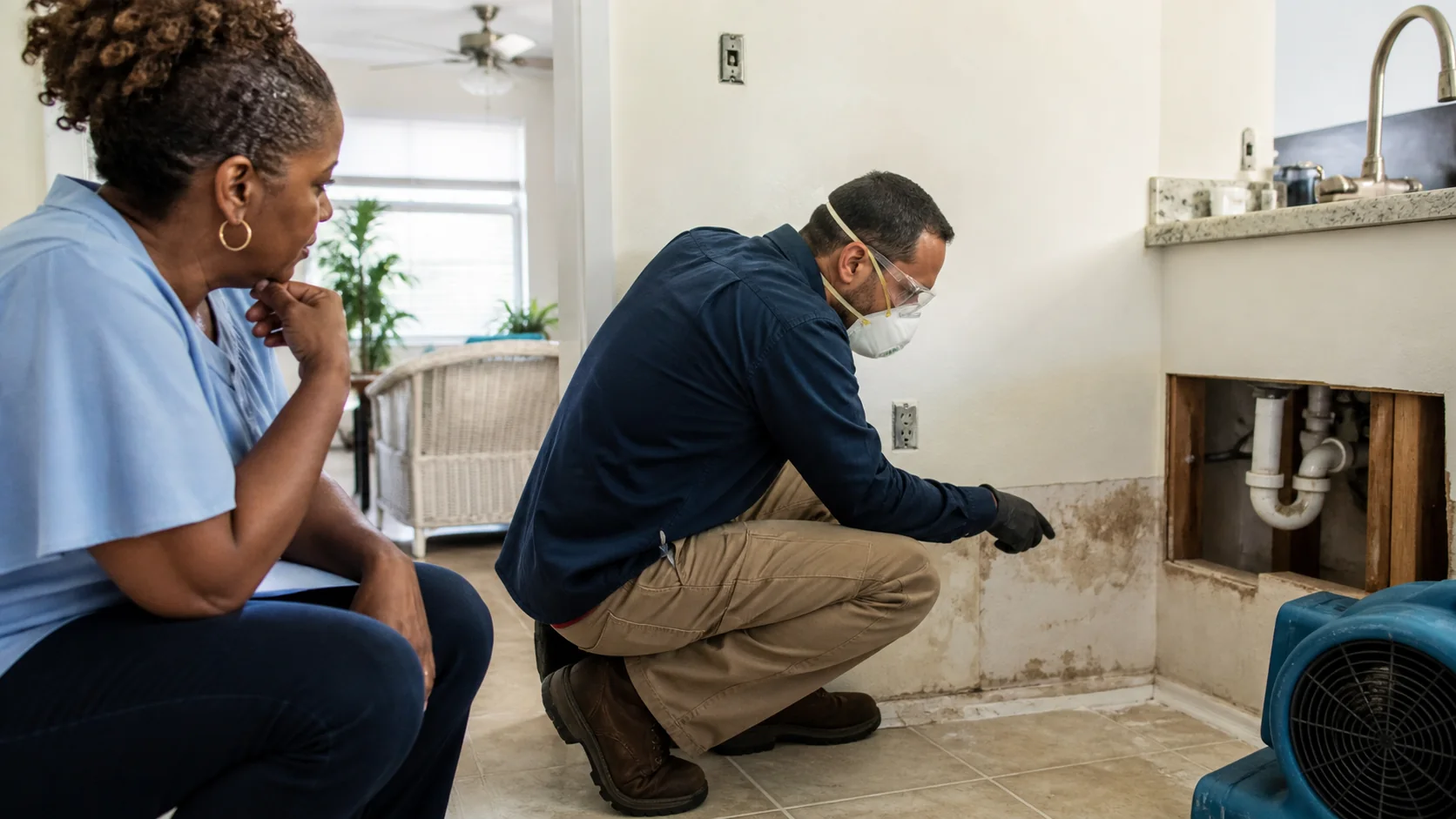
Adjusters investigating a mold claim are not primarily evaluating the mold. They are working backward to establish the proximate cause of the moisture that produced it. This is the single factor that determines whether mold remediation is paid at all, before the sub-limit even comes into play. A claim built around a sudden, identifiable event (a supply line that let go, a storm that breached the roof on a specific date, an air conditioner drain pan that overflowed and was reported promptly) has a clear covered origin. A claim where the water source can’t be pinned to a single sudden event, or where the moisture pattern suggests it built up gradually, is far more likely to be classified as long-term seepage, condensation, or deferred maintenance. All of those are typically excluded, regardless of how visible or extensive the resulting mold is.
This is why two homes with visually identical mold damage can get opposite claim outcomes. The determining fact is not how bad the mold looks, it is what caused the water, how suddenly it happened, and how quickly it was identified and reported. Homeowners are generally better positioned when a leak is caught early, reported promptly, and traced to a specific triggering event. Discovering mold only after it has spread extensively can work against a claim: an adjuster sometimes reads that spread as evidence the water had been present for a long time before anyone noticed.
What you need to document before remediation starts
Mold claims are decided on documentation more than almost any other type of homeowners claim, because the insurer has to reconstruct both the cause of the water and the extent of the resulting damage after the fact. Before any remediation work begins, it generally helps to have the following in place:
Photos and video of the affected area, taken before anything is moved, cleaned, or demolished, showing the visible mold, the water source if it is still identifiable, and the surrounding damage. Moisture readings from a moisture meter, which document how wet the affected materials are at the time of discovery and help establish that the water intrusion was recent rather than long-standing. A written incident description noting when the leak or water event was first noticed and when it was reported to the insurer, since a gap between discovery and reporting can itself become a point of dispute. A mold assessment or inspection report from an independent, licensed mold assessor. It documents the scope of contamination and, ideally, offers an opinion on the likely source and timeline of the moisture. Carriers frequently ask for this separately from the remediation contractor’s own estimate. Remediation and repair estimates from a licensed contractor, itemized so the water mitigation, mold remediation, and rebuild portions of the work are broken out separately, since they may be paid under different parts of the policy.
One point is worth emphasizing on its own. Starting remediation, demolition, or cleanup before the insurer or its adjuster has had a chance to inspect the damage can jeopardize the claim. Once affected drywall, flooring, or cabinetry is removed, the insurer loses its own opportunity to verify the extent and likely cause of the damage, and that lost opportunity can be held against the claim. Stopping an active water source is reasonable and often necessary to prevent further damage. Full remediation is generally safer to hold off on until the claim has been reported and, where possible, documented by an adjuster or through the photo and moisture-reading record described above.
How prior mold claims affect what other carriers will write
Homeowners insurance claims, including water and mold claims, are recorded in a claims history database that most Florida carriers pull during underwriting, commonly called the CLUE report, after the industry’s central repository. That record generally stays associated with the property, and separately with the policyholder, for several years. It doesn’t disappear simply because the homeowner switches carriers. A prior mold or water damage claim on that record is one of the underwriting flags carriers weigh most heavily, because it’s treated as a signal of elevated risk for a repeat loss, particularly if the mold claim suggests an unresolved underlying moisture or plumbing issue in the home.
In practice this can show up in a few ways when a homeowner shops for a new policy or a home with a prior mold claim changes hands. Some carriers price the policy higher than they would for a similar home with no claims history. Some decline to offer a quote at all once they see a mold or water claim on the record. Others will quote the home but exclude mold coverage entirely or attach a lower sub-limit than they would otherwise offer. Because carriers vary considerably in how they weigh a given claims history, it’s common for two carriers looking at the same CLUE report to reach different conclusions, so a decline or a reduced offer from one carrier doesn’t necessarily mean every carrier will respond the same way. This is one of the reasons an itemized, well-documented mold claim (one that clearly traces to a specific covered event and a completed, professionally verified remediation) tends to be viewed more favorably in later underwriting than a claim with an ambiguous or undocumented cause.
Frequently asked questions
Does homeowners insurance cover mold in Florida?
Sometimes, and only up to a capped amount. Mold is covered when it grows out of a sudden, covered water event (a storm-damaged roof, a burst pipe) but not when it comes from long-term seepage, condensation, or lack of maintenance. Even when it is covered, most Florida HO-3 policies cap mold remediation separately, commonly around $10,000 per occurrence, on top of any water damage sublimit already reducing the claim.
Does homeowners insurance ever cover mold from long-term humidity or a lack of maintenance?
Generally no. Most Florida HO-3 policies exclude damage from continuous or repeated seepage, condensation, and general deterioration, and mold that grows out of those conditions is excluded along with the water that caused it, regardless of the mold sub-limit.
Is there a separate mold coverage limit even when the underlying water damage is covered?
Typically yes. Most policies pay for mold testing and remediation only up to a specific sub-limit, often cited around $10,000 and sometimes as low as $5,000, which applies on top of any cap already reducing the underlying water damage portion of the claim.
Can I raise my mold coverage limit?
Some carriers offer a buy-up endorsement that increases the mold sub-limit for additional premium. Availability, the higher limit offered, and the added cost all vary by carrier, so this is confirmed with the carrier or agent directly rather than assumed to be universal.
Should I start cleaning up mold before my insurer inspects it?
Stopping an active water source is reasonable, but full remediation before the insurer has inspected or the damage has been thoroughly documented can weaken the claim, since it removes the insurer’s ability to independently verify the cause and extent of the loss.
Will a mold claim make it harder to get insurance later?
It can. A mold or water damage claim is generally recorded on the property’s and policyholder’s claims history and reviewed by carriers during underwriting. It can lead to a higher premium, a mold exclusion, a reduced mold sub-limit, or in some cases a decline, though carriers vary in how they weigh a given history.
How is a mold claim different from a water damage claim on the same policy?
They are often part of the same event but are frequently subject to separate dollar caps: one for the water damage and mitigation itself, described on the site’s Water Damage Limit page, and a second, separate sub-limit specifically for mold testing and remediation.
 Need a specific insurance company?
Get a quote from your Florida-licensed agent
Share a few details about your home, and our team will follow up to review your request and explain the next step.
- Florida-licensed agent
- Help with all property types
- No obligation
- Quotes typically back within 24 to 48 hours