Hurricane insurance preparedness checklist
Prepare before a storm is named for your area. Carriers may stop writing or changing coverage when a storm is near.
Quick answers
Documents to have off-site or in the cloud
If a storm damages your home badly enough, the paper copies of your insurance documents may not survive it either. Before hurricane season ramps up, get copies of your declarations page (the summary page showing your carrier, policy number, coverage limits, and deductibles), your full policy, and your home inventory (see below) somewhere that doesn’t depend on the house still being standing. That can be as simple as a folder in cloud storage (Google Drive, Dropbox, iCloud), a set of photos emailed to yourself, or a printed copy kept at a relative’s house or a safe-deposit box out of the storm path. It’s also worth saving your agent’s or carrier’s claims phone number and your policy number somewhere you can reach without power or internet, since filing a claim quickly after a storm often starts with just that information.
Do you know your hurricane deductible before a storm is named?
Most Florida homeowners policies have a separate hurricane deductible that only applies to hurricane damage, and it works differently from your everyday deductible. Your all-other-perils (AOP) deductible is usually a flat dollar amount, such as $1,000 or $2,500, and applies to things like a kitchen fire or a burst pipe. The hurricane deductible, by contrast, is typically a percentage of your Coverage A dwelling limit, commonly 2%, 5%, or 10%. It applies once the National Hurricane Center has issued a hurricane watch or warning for part of Florida, or the storm has been classified as a hurricane. The exact trigger language is set by your policy, so check yours. On a $400,000 dwelling limit, a 5% hurricane deductible means $20,000 comes out of your pocket before hurricane coverage starts paying. That’s a very different number than your standard deductible. Find this figure on your declarations page before storm season, not while you’re filling out a claim form after the roof is already damaged.
Home inventory: what should you photograph, and when?
A home inventory is a room-by-room record of what you own, built before you need it. Walk through each room and take photos or a slow video narrating what you see, opening closets, cabinets, and drawers along the way. For higher-value items (electronics, appliances, furniture, jewelry, tools) keep receipts, serial numbers, or model numbers where you have them, since that documentation speeds up a claim and can support the value you’re claiming. Do this at the start of hurricane season and update it whenever you make a significant purchase or renovation, then store a copy off-site along with your policy documents as described above. An inventory built after a storm, from memory, is far less useful to a claims adjuster than one built beforehand with dates and images attached.
What should be done to the property itself?
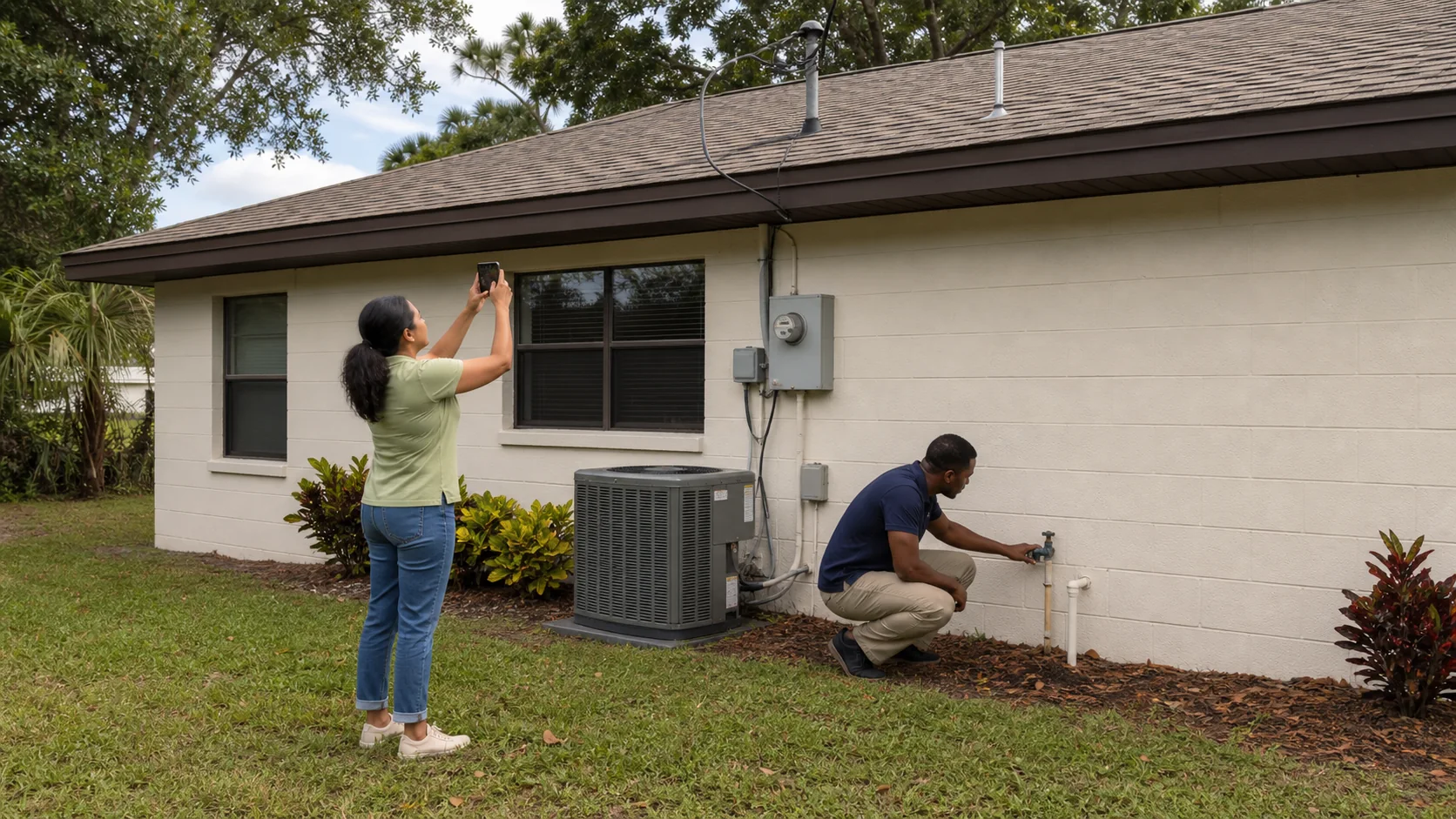
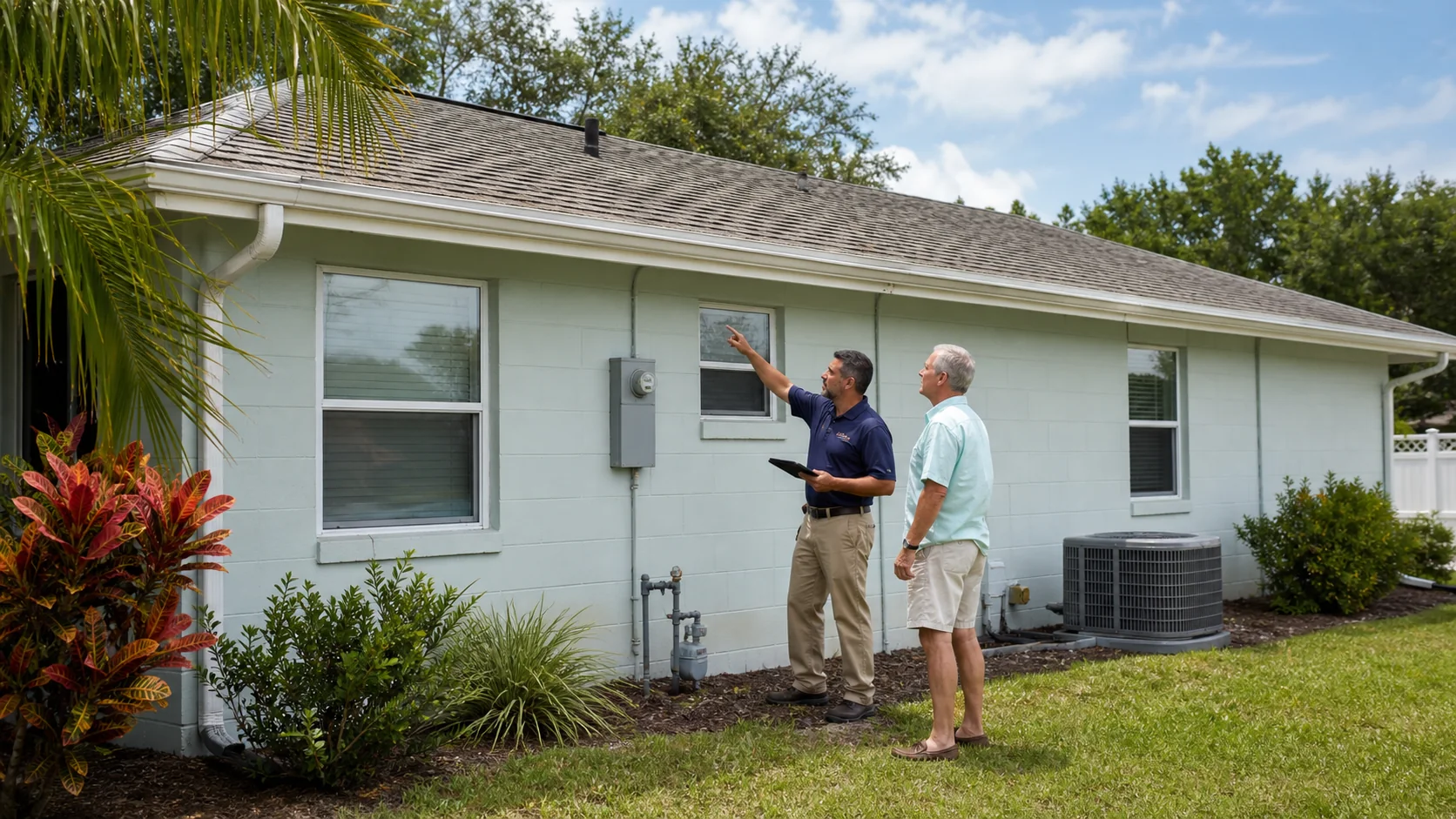
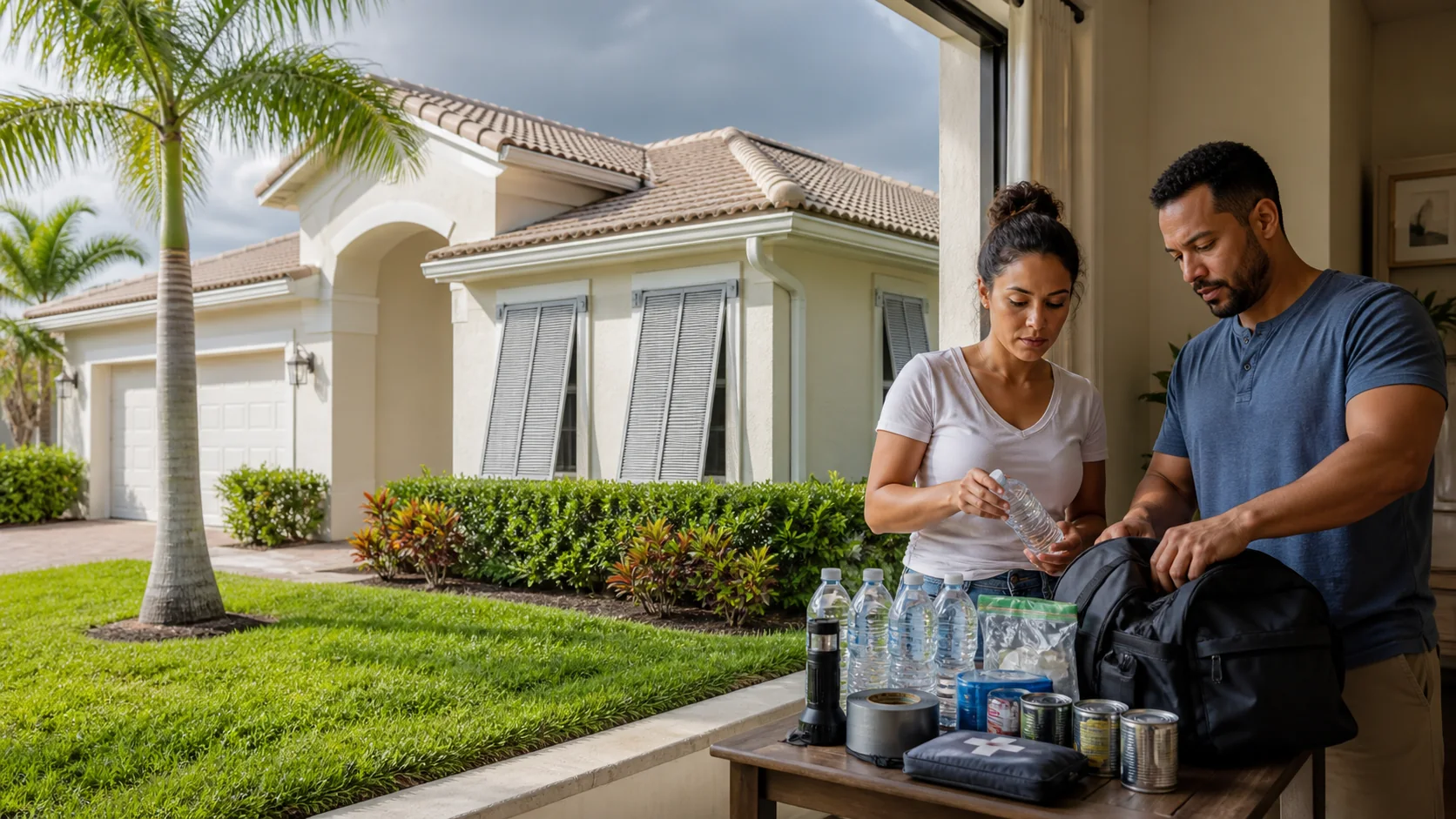
Physical preparation and insurance preparation overlap more than most homeowners expect. Installing shutters or other impact protection on windows and doors, securing or bringing in loose items (patio furniture, grills, potted plants), and clearing gutters and drains all reduce the odds of a claim in the first place, and some of these upgrades can also qualify a home for wind-mitigation discounts (documented through a wind mitigation inspection, separate from this checklist). Just as important for claims purposes: photograph or video the exterior and roof of your home in its normal, pre-storm condition. That “before” documentation is what lets you and your adjuster clearly identify what the storm changed, rather than arguing over pre-existing wear versus new damage.
Once a storm is named, what changes about buying or changing coverage?
Florida carriers commonly impose a binding restriction, sometimes called a moratorium or an underwriting “box,” once a storm is close enough to threaten the state. This typically starts once the National Hurricane Center has issued a hurricane or tropical storm watch or warning covering part of Florida, or in some cases as soon as a storm is named and forecast toward the state. During that window, most insurers will not bind a brand-new homeowners policy, and many also won’t process coverage increases or certain endorsements on existing policies. The exact trigger and how long the restriction lasts is set by each carrier individually, so two companies can open and close their binding windows at different times for the same storm. The practical takeaway: if you’re shopping for a new policy or considering raising your coverage limits, do it well before hurricane season is active in your area, not while a system is already spinning up in the tropics. Existing coverage in force before the restriction began is not affected by the moratorium itself.
After the storm: what do you do first, and in what order?
Once it’s safe to return home, confirm there are no immediate hazards (downed power lines, gas leaks, structural instability) before going inside. Photograph and video the damage thoroughly before you touch anything or begin cleanup, capturing wide shots of each affected area as well as close-ups of specific damage. Most policies require you to make reasonable temporary repairs to prevent further damage, such as covering a hole in the roof with a tarp or boarding up a broken window; keep every receipt for materials and labor, since these costs are typically reimbursable. Avoid full repairs or replacement of damaged materials until your adjuster has seen them (or you have thorough documentation) if permanent repair can reasonably wait. Contact your carrier to start the claims process as soon as you reasonably can: most policies set a deadline for reporting a claim, and starting the process early tends to move things along faster given how many claims a single storm can generate statewide.
Frequently asked questions
Do I have to pay my hurricane deductible for every storm that hits Florida?
No. The hurricane deductible only applies once the specific trigger in your policy is met, typically a hurricane watch or warning issued for part of Florida or the storm being classified as a hurricane at the time of loss. Damage from a tropical storm that never reaches hurricane status, or from an unrelated wind event, is usually subject to your regular AOP deductible instead.
Can I still change my agent or add an endorsement once a storm is approaching?
Once a carrier’s binding restriction is in effect, most companies pause new policies and many coverage changes on existing ones, including some endorsements. Rules vary by carrier, so if you’re unsure whether a specific change is blocked, ask your agent directly rather than assuming.
How often should I update my home inventory?
At minimum once a year at the start of hurricane season, and again after any major purchase, renovation, or when you acquire higher-value items like electronics or jewelry.
Is flood damage covered by my homeowners hurricane deductible?
No. Standard homeowners policies exclude flood damage, including storm surge, regardless of which deductible applies. Flood coverage requires a separate flood insurance policy, and flood policies are also typically subject to binding restrictions as a storm approaches.
What if I can’t find my declarations page after the storm?
Contact your agent or carrier directly. They can resend it or confirm your policy number and coverage over the phone. This is exactly the scenario the off-site copy described above is meant to prevent.
Does boarding up my windows myself void my claim if I make a mistake?
No, but keep it reasonable and keep your receipts. Insurers generally expect homeowners to take reasonable steps to prevent further damage after a loss, not to perform professional-grade repairs; the cost of reasonable temporary measures is typically reimbursable as part of the claim.
 Need a specific insurance company?
Get a quote from your Florida-licensed agent
Share a few details about your home, and our team will follow up to review your request and explain the next step.
- Florida-licensed agent
- Help with all property types
- No obligation
- Quotes typically back within 24 to 48 hours