Does home insurance cover a leaking roof?
A policy may cover sudden roof damage and the water damage that follows when the cause is covered. It often does not pay for wear, old materials, poor upkeep, or a leak that happened over time.
Quick answers
What a policy treats as a covered roof leak
Most Florida homeowners policies (HO-3 and DP-3 forms) insure the dwelling (which includes the roof, as covered under Coverage A) on an “open perils” or “all risk” basis. That means direct physical loss to the roof is covered unless the policy specifically excludes the cause. Wind, hail, a falling tree limb, fire, and vandalism are covered causes. Wear and tear, deterioration, age, and faulty original construction or repair are excluded causes, almost without exception, on every homeowners form sold in Florida. A roof leak claim is decided by working out which category the actual cause of the leak falls into.
In practice, that turns every roof leak claim into two separate questions. First, what physically opened the roof to water? Was it a specific covered event or the slow failure of aging materials? Second, only if the first answer is a covered peril, how much of the resulting interior damage does the policy pay for, and under which coverage? The roof repair itself falls under Coverage A, as do damaged ceilings and drywall. Damaged furniture or belongings fall under Coverage C. The dwelling coverage mechanics behind that first payout are covered on the Coverage A: Dwelling page; this page focuses specifically on how the leak itself gets classified as covered or not.
Why the leak and the water damage are settled as two different things
Adjusters do not evaluate “the leak” as one event. They evaluate the cause of the opening in the roof, and separately, the water damage that came through it, because a policy can cover one without covering the other. If a windstorm tears back a section of shingles and rain gets into the attic before anyone can tarp it, both the roof repair and the resulting ceiling damage are typically covered. The applicable deductible applies: hurricane or all-other-perils, whichever fits the triggering event. If the underlying cause is excluded instead (say, flashing around a chimney that corroded and separated over several years) the roof repair itself is not covered. In most cases, neither is the interior damage it caused, because the excluded cause taints the whole chain of loss.
There is one nuance worth knowing. Many policies contain an “ensuing loss” provision. Under it, a resulting loss can still be covered even when its underlying trigger was itself excluded, as long as the resulting loss is not separately excluded. This is a narrow, fact-specific carve-out that depends on the exact policy language, not a rule to count on. It’s also worth knowing that even a covered leak is still subject to whatever sublimit the policy applies to water damage from the dwelling’s own systems and structure. That cap is addressed in detail on the Water Damage Limit page and is a separate question from whether the leak was covered in the first place.
What “sudden and accidental” has to mean for a leak to be paid
“Sudden and accidental” is the shorthand adjusters and claims literature use for the standard that separates a covered loss from an excluded one. It doesn’t require the damage to happen in an instant. A hurricane unfolding over several hours still qualifies. But it does require the loss to trace back to a specific, identifiable event, not to ordinary deterioration that built up over weeks, months, or years. Nearly every homeowners form excludes that kind of slow seepage explicitly, worded along the lines of “repeated leakage occurring over an extended period.” That pattern is treated as a maintenance failure, not an insurable event.
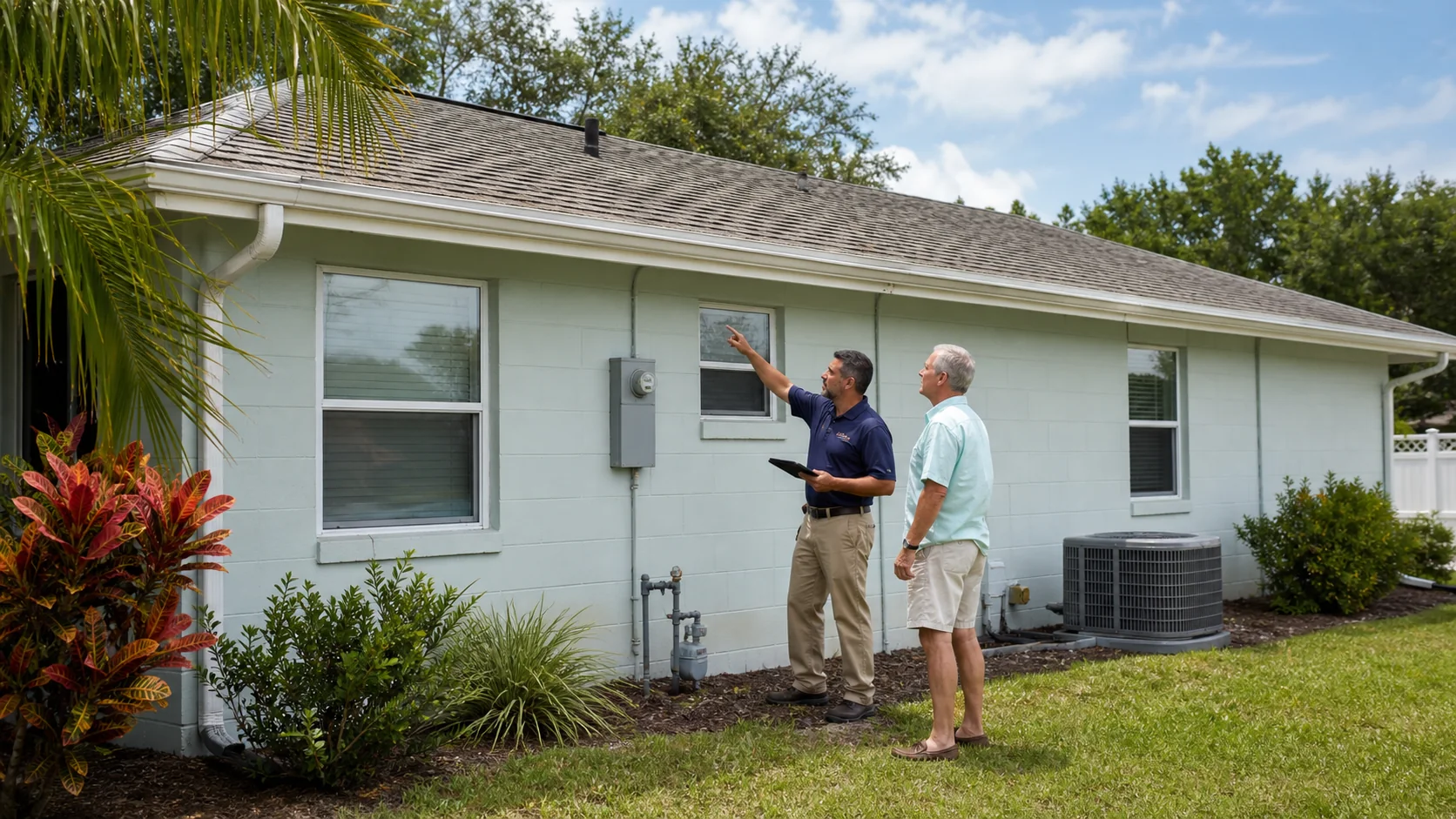
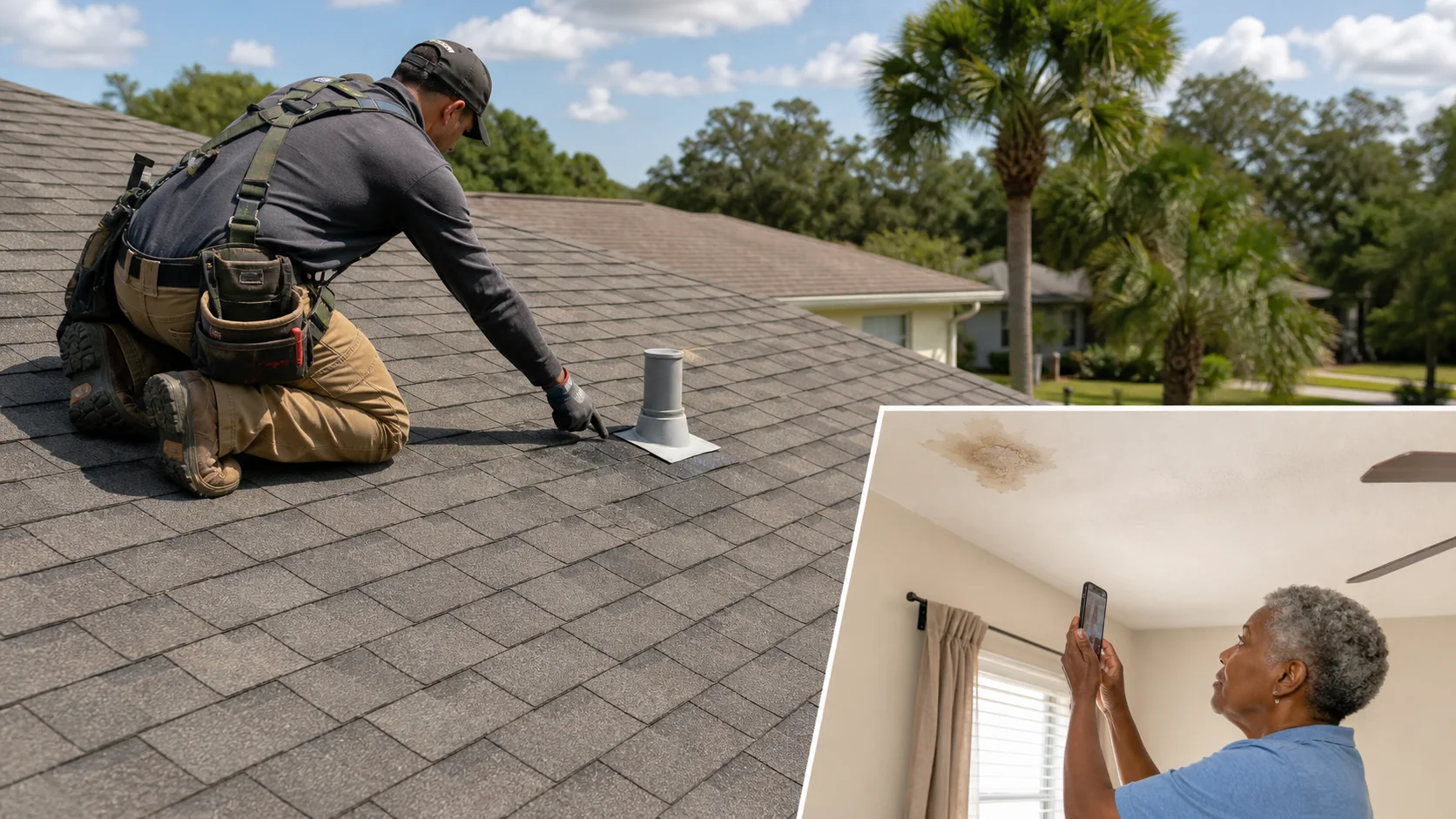
To decide which side of that line a claim falls on, an adjuster looks at physical evidence rather than the homeowner’s account alone. On a disputed or high-value claim, a roofing contractor or forensic engineer sometimes works alongside them. Fresh water stains with sharp edges point to a recent, single event. Discolored, settled staining with visible mold growth points to a leak that has been active for a long time. Granule loss that’s scattered and localized, in a pattern consistent with hail impact or wind-lifted edges, reads differently than uniform granule loss spread evenly across the whole roof. That reads as ordinary aging. An existing patch or prior repair over the same area is a strong signal the leak point was already known before the claimed event. Moisture readings taken at the decking help establish how long water has been intruding, since damp wood holds a different reading depending on whether the intrusion is hours old or has been going on for a season. Matching the leak’s timeline to a documented storm date and verified wind speeds for the area is one of the most persuasive pieces of evidence a homeowner can bring to the inspection.
How roof age changes the answer
Roof age affects a roof leak claim in two distinct ways that are easy to conflate but are governed differently. The first is causation scrutiny. Statistically, an older roof is more likely to leak because materials have simply aged past their service life, so adjusters look more closely at wear-based explanations on a 15-year-old roof than on a 3-year-old one. That scrutiny doesn’t mean an old roof can never have a covered claim: a genuine wind event that tears shingles off a 20-year-old roof is still a covered peril. It means the burden of showing a specific triggering event, rather than accumulated wear, falls more heavily on the evidence described above.
The second way age matters is settlement, which is a contract question rather than a causation question. Florida Statute §627.7011 restricts insurers from refusing to issue or renew a homeowners policy solely because a roof is under 15 years old. It also requires that once a roof reaches 15 years, the insurer must allow the homeowner a roof inspection by an authorized inspector before requiring replacement as a condition of keeping the policy. That statute governs eligibility and non-renewal, not how an individual claim is paid. Separately, many Florida carriers write their own roof-age schedule into the policy. Under that schedule, a covered roof loss is still settled on an actual cash value basis rather than full replacement cost once the roof passes an age the carrier sets, commonly around 10 years for asphalt shingle roofs. That means a leak can be entirely covered and still get paid out at a depreciated amount for the roof-surface repair. The mechanics of that depreciation, and how it differs from a full replacement-cost payout, are covered on the Replacement Cost and Actual Cash Value (ACV) pages; check the declarations page or the roof-surface endorsement of a specific policy to see which basis applies before assuming either one.
What to photograph and document before anyone repairs it
Once water starts coming through a ceiling, the instinct is to fix it immediately. Emergency mitigation (tarping the roof, extracting standing water, running fans to limit mold growth) is expected. Most policies require the homeowner to take reasonable steps to prevent further damage. But permanent repair, meaning replacing the roof section or the damaged interior finishes, before an adjuster has inspected the loss can work against the claim. It removes the physical evidence (the exact staining pattern, the granule loss, the state of the decking) that the adjuster needs to determine cause. Tarping a roof for safety or to stop ongoing damage is a reasonable step to take. A full re-roof or interior remodel before the inspection is not.
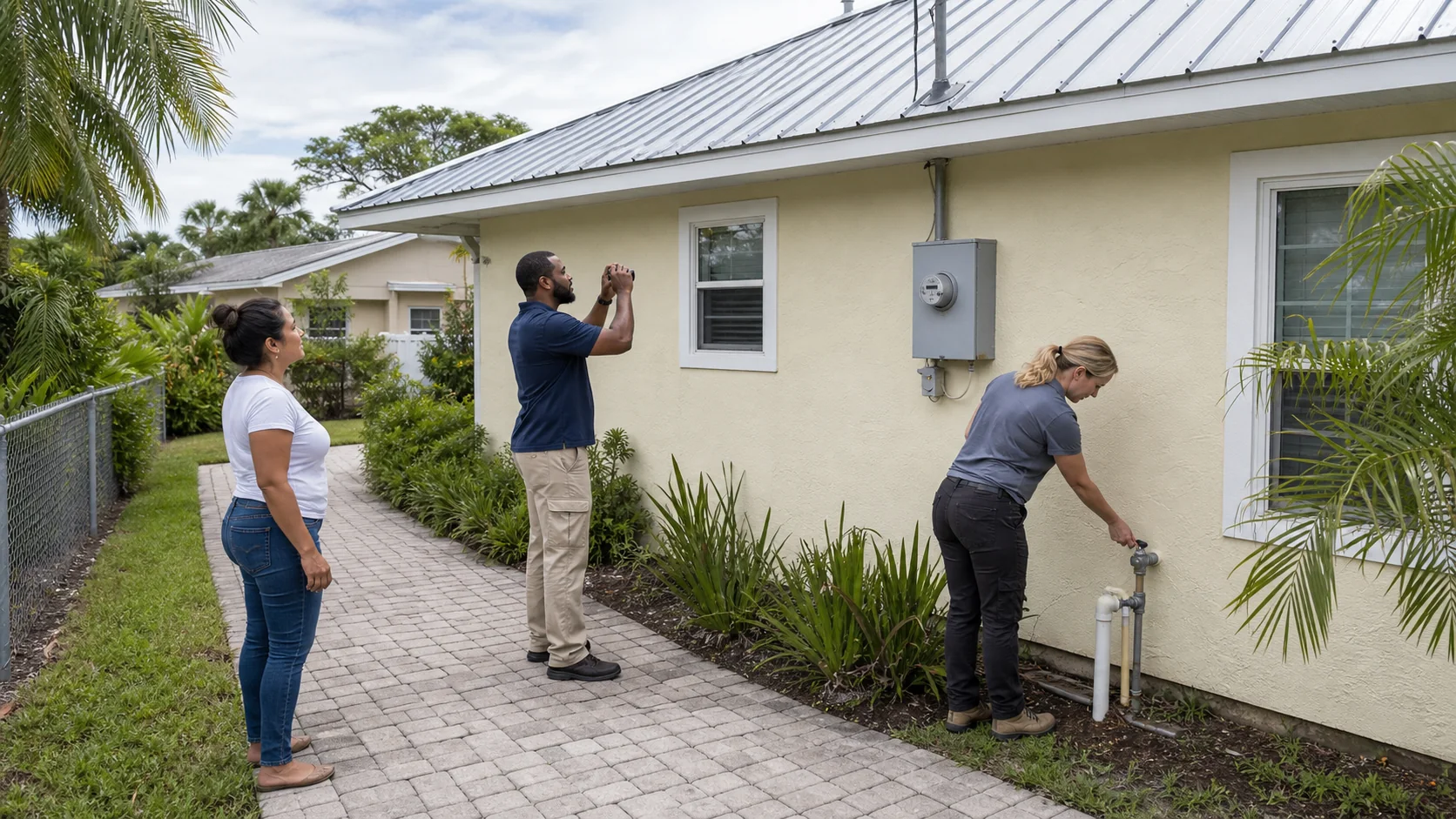
Before any repair, take wide shots and close-up photos of the roof from the ground and, where safely possible, from the roof itself, covering every slope and any visible damage. Add interior photos of ceiling and wall staining from multiple angles, with something in frame for scale, plus attic photos if the attic is accessible. A video walking the full perimeter of the roof and through each affected interior room adds context that individual photos miss. Date everything (either through the device’s own metadata or by including a dated newspaper, phone screen, or written note in frame) because establishing when the damage first appeared matters as much as what it looked like. Save receipts for any emergency mitigation work. If a roofer inspects the damage before the adjuster does, get a written report from them tying the damage to a specific event or date. That report, handed to the adjuster at the inspection, is often the single most useful piece of documentation a homeowner can provide.
What a roof leak claim does to your renewal and your eligibility
Filing a roof leak claim does more than resolve the immediate repair. Once a claim is filed and paid, it becomes part of the property’s claims history. Insurers report that history to shared industry claims databases that other carriers can pull during underwriting, commonly called a CLUE (Comprehensive Loss Underwriting Exchange) report. That history typically stays visible to insurers for several years and follows the property as well as the current policyholder. It gets checked even when a homeowner shops for a new policy with a different carrier.
In Florida specifically, a roof leak claim is one of the better-documented triggers for non-renewal, particularly on an older roof, or when it’s the second water-related claim on the same property within a few years. Florida law (Fla. Stat. §627.4133) requires insurers to give at least 120 days’ written notice before non-renewing a homeowners policy. The notice must include the reason for the non-renewal. A covered, correctly paid claim can still lead to non-renewal at the policy’s next term. That risk is worth weighing, particularly for a small leak close to the deductible amount, where the cost of filing may not be worth the effect on future renewal and shopping options: a conversation worth having with an agent before filing rather than after.
Frequently asked questions
Does homeowners insurance cover a roof leak on an old roof?
It can, if the leak is caused by a covered peril like wind or a falling tree limb rather than by the roof simply wearing out. Age affects how closely the cause is scrutinized and, separately, how the roof-surface repair is settled, often at actual cash value rather than full replacement cost once the roof passes a carrier-set age threshold, but age alone does not disqualify a genuinely storm-caused leak.
Will my policy pay for the interior water damage, or just the roof?
If the underlying cause is covered, both are generally payable: the roof repair under Coverage A, and the resulting interior damage to ceilings, walls, and belongings under the applicable coverages, subject to the policy’s deductible and any water-damage sublimit. If the underlying cause is excluded (wear and tear, deferred maintenance) neither the roof repair nor the resulting interior damage is typically covered.
Can I have the roof repaired before the adjuster inspects it?
Reasonable emergency steps to stop further damage, like tarping an active leak, are expected and generally will not hurt a claim. A full permanent repair or re-roof before the adjuster has seen the damage can remove the evidence needed to establish cause and may work against the claim. Wait for the inspection whenever the damage is not actively worsening the loss.
What does “sudden and accidental” mean if the storm lasted hours?
It does not require instantaneous damage. It means the loss has to trace to an identifiable event (a storm, a falling object, a specific date) rather than to leakage that built up gradually over weeks, months, or years, which nearly every policy excludes regardless of how the water ultimately got in.
Does filing a roof leak claim raise my premium or affect renewal?
It can do both. The claim becomes part of the property’s claims history, visible to future insurers through shared industry databases, and in Florida a roof leak is a well-documented non-renewal trigger, particularly on an older roof or where it is not the first water-related claim on the property.
How is a roof leak claim different from a general water damage claim?
A roof leak claim is specifically about whether the opening in the roof was caused by a covered peril. A broader water damage claim can originate from plumbing, appliances, or other interior sources instead of the roof, and is evaluated under different causation and sublimit rules; see the Water Damage Limit page for how the interior-damage cap works regardless of source.
Does Citizens Property Insurance handle roof leak claims differently than private carriers?
Citizens applies the same general causation standard, a covered peril versus wear and tear, as private Florida carriers, since it operates under the same state statutes, including the roof-age protections in Fla. Stat. §627.7011. Specific roof-age settlement schedules and inspection requirements should be confirmed against the current Citizens policy language, since program rules are updated periodically.
 Need a specific insurance company?
Get a quote from your Florida-licensed agent
Share a few details about your home, and our team will follow up to review your request and explain the next step.
- Florida-licensed agent
- Help with all property types
- No obligation
- Quotes typically back within 24 to 48 hours