
Do you need flood insurance in Islamorada and Key Largo?
Monroe County says the whole county lies in a floodplain, and in 2017 Irma’s surge reached 4 to 6 feet above ground in the Middle and Upper Keys. Here’s how flood zones, elevated homes, enclosure limits and local discounts shape your policy.
Quick answers
Sourced from FEMA’s Flood Map Service Center and Community Rating System list, Monroe County, the Village of Islamorada, the National Hurricane Center, Citizens Property Insurance Corporation and FloodSmart.gov. Last verified: October 2026.
Are Islamorada and Key Largo in a Flood Zone?
Almost every address is. Monroe County’s flooding page says all of Monroe County is located in a floodplain, and the county’s building requirements page sets rules for the three kinds of high-risk zones found on Keys maps: A zones such as AE, V zones such as VE, and Coastal A Zones, which it treats like V zones. If a home sits in more than one zone, the stricter rules apply.
The maps in force for both Islamorada and unincorporated Monroe County took effect on February 18, 2005, according to FEMA. To check an address, search it on the FEMA Flood Map Service Center. Islamorada’s floodplain management page also points residents to the county’s map viewer and to the village’s elevation certificate records. The flood zones guide explains what each zone letter means.
New maps are on the way, though not yet in effect. Monroe County’s preliminary flood maps page says FEMA released preliminary coastal maps in December 2019, FEMA is reviewing the county’s appeal, and a new set of preliminary maps will come out before the maps are finalized. Islamorada says FEMA will give six months’ notice before its new maps take effect. Both note that the new maps use a different elevation reference (NAVD88 in place of NGVD29), a shift of about 1.5 feet on average, so old and new flood elevations can’t be compared number for number.
Do You Need Flood Insurance in Islamorada and Key Largo?
For most homeowners, yes. Two rules decide it:
- Your mortgage. Federal rules make lenders require flood insurance on a home in a high-risk zone when the loan is federally regulated, federally insured or government backed, which describes most mortgages.
- Citizens. A Citizens home policy with wind coverage must have flood coverage alongside it in any high-risk zone. Outside high-risk zones the rule follows dwelling coverage: $400,000 or more today, and every policy with wind coverage from January 1, 2027. Policies for condo unit owners and renters, and wind-excluded policies, are exempt. The Citizens flood requirement guide has the dates.
If you own outright and aren’t with Citizens, the choice is yours. Monroe County reminds residents that flood damage isn’t covered by homeowners insurance, and storm surge counts as flood.

Why Is So Much of the Upper Keys in VE and AE Zones?
Height above the water is the short answer. Islamorada’s village profile gives the village an average elevation of only about five feet above sea level, spread across five inhabited islands from Plantation Key to Lower Matecumbe Key. Monroe County puts its base flood elevations, the level water is expected to reach in a flood with a 1% chance each year, at 6 to 17 feet above mean sea level. When the expected flood line sits above the ground on most lots, most lots land in a high-risk zone.
The water also comes from more than one direction. The county lists heavy rain from hurricanes, tropical storms and summer thunderstorms; storm surge driven ashore by strong winds; and flash flooding from sudden downpours. Shorelines open to storm waves are where V zones are drawn, because FEMA treats them as coastal high hazard areas. Islamorada adds that its low ground makes it more exposed to flooding from rising seas and higher tides.
Hurricane Irma tested all of this. It made landfall near Cudjoe Key in the Lower Keys on September 10, 2017, as a Category 4 hurricane. The National Hurricane Center’s report on Hurricane Irma found maximum inundation of 4 to 6 feet above ground across the Middle and Upper Keys, and a surveyed high water mark of 4.11 feet above ground in Key Largo.

Is Key Largo Part of Islamorada?
No, and it matters for your flood rules. Islamorada incorporated as a village on December 31, 1997, and covers the islands between mile marker 90.0 and mile marker 72.6. Key Largo, to the north, is in unincorporated Monroe County. That means:
- In Key Largo, Monroe County’s building department and floodplain rules apply, and so does the county’s flood discount.
- In Islamorada, the village runs its own floodplain program and has its own discount.
The two discounts aren’t the same, so check which government issues permits for your address before you compare quotes with a neighbor across the line.
What Can Go Below an Elevated Home in the Keys?
Raised homes are the norm here, and the space underneath comes with rules. Monroe County’s building requirements page requires homes built after December 31, 1974, to have the lowest floor at or above the base flood elevation. The county sets the minimum at the base flood elevation plus 1 foot: measured at the lowest floor in an A zone, and at the bottom of the lowest horizontal structural member in a V zone or Coastal A Zone.
Below that level, the county allows an enclosure only for parking, building access and limited storage. Limited storage means things normally kept outdoors, such as lawnmowers, rakes and wheelbarrows. Furniture, workbenches, freezers and refrigerators don’t qualify, and the county warns that a finished enclosure below the base flood elevation may not be permitted and can face enforcement. The county also requires flood openings in every enclosure wall, breakaway walls included.
Breakaway walls are built to give way under storm surge and waves so the house on its pilings survives. FEMA’s technical bulletin on breakaway walls says they apply in V zones and that enclosed areas there may be used only for parking, building access or storage.
The 50% rule matters after a storm, too. The county says that if improvements or repairs cost 50% or more of the building’s market value, the whole building must be brought up to current flood standards, including elevation.
What Does Flood Insurance Cover Below an Elevated Home?
Less than many owners expect. For elevated homes built after a community’s first flood maps (FEMA calls them post-FIRM) in most high-risk zones, FEMA’s technical bulletin on breakaway walls says NFIP policies have coverage limits for enclosures and for contents below the lowest elevated floor. A FloodSmart appeal decision on an elevated home explains that coverage there is limited to the items listed in the policy. In that case, a riding mower, a generator, pressure washers and other items stored in the garage area weren’t paid.
The same bulletin notes that elevated buildings with enclosures, breakaway walls or not, carry higher premiums than buildings left open underneath. Before you buy, ask your agent how your enclosure is rated and what the policy lists as covered below the lowest floor. Keep valuables and anything you can’t afford to lose upstairs.
What Sets the Cost of Flood Insurance in the Upper Keys?
Start with an elevation certificate: Monroe County notes that one is needed to rate a home’s flood risk accurately. FEMA then prices the NFIP policy from the home’s elevation, distance to water, first-floor height, rebuilding cost and the deductible you pick, and the rate is the same from every agent for the same home and coverage.
Both communities earn Community Rating System discounts, per FEMA’s list:
- Unincorporated Monroe County, including Key Largo: Class 3 since April 1, 2022, a 35% discount for policies in high-risk zones and 10% outside them. The county’s flood insurance page confirms the 35% figure.
- Village of Islamorada: Class 5 since April 1, 2022, a 25% discount for policies in high-risk zones and 10% outside them.
The discount appears on your NFIP policy automatically. Monroe County says to contact your agent if you don’t see it. The NFIP covers a home up to $250,000 for the building and $100,000 for belongings, so a costlier home may need excess flood insurance or a private flood policy.
Which Companies Write Flood Insurance in Islamorada and Key Largo?
NFIP policies are sold through many insurers and agents at FEMA’s rate. Private flood insurers set their own prices and rules, and not every one writes in the Keys. The flood carrier directory lists companies writing flood insurance in Florida, and the NFIP vs private comparison shows how limits and waiting periods differ. A new NFIP policy usually takes 30 days to start, so buy well before hurricane season. Run a marina, resort or restaurant? See the commercial flood guide for Islamorada and Key Largo.
Local Flood Resources for Islamorada and Key Largo
- Village of Islamorada floodplain management page: floodmanager@islamorada.fl.us, or the Senior Floodplain/CRS Coordinator at 305-664-6423.
- Monroe County flood map questions (unincorporated areas, including Key Largo): FloodMaps@MonroeCounty-FL.gov or 305-453-8759, per the county’s preliminary flood maps page.
- Monroe County building requirements page: elevation, enclosure and 50% rule details; main county line 305-294-4641.
- Monroe County Emergency Management: 305-289-6018.
- FEMA: the FEMA Flood Map Service Center for official maps.
Frequently asked questions
Is all of Islamorada and Key Largo in a flood zone?
Monroe County says all of the county is located in a floodplain. Zones still vary by lot, from AE to VE, so check your address on the FEMA Flood Map Service Center.
How much is flood insurance in Islamorada or Key Largo?
It depends on the home. FEMA prices each NFIP policy from its elevation, location, rebuilding cost and deductible. Key Largo homes get unincorporated Monroe County’s Class 3 discount (35% in high-risk zones), and Islamorada homes get the village’s Class 5 discount (25%).
Does Islamorada participate in the Community Rating System?
Yes. FEMA lists the Village of Islamorada as Class 5, a 25% discount for policies in high-risk zones and 10% outside them. Unincorporated Monroe County, which includes Key Largo, is Class 3.
Can I turn the area under my raised home into living space?
In unincorporated Monroe County, enclosures below the base flood elevation are limited to parking, building access and limited storage, and the county says a finished enclosure may not be permitted. Islamorada sets its own rules, so ask the village’s floodplain office first.
Where can I get an elevation certificate?
In Islamorada, the village’s floodplain management page links to its elevation certificate records. In Key Largo, ask Monroe County’s floodplain staff. If none is on file, a licensed surveyor can prepare one.
Does flood insurance cover hurricane storm surge in the Keys?
Yes. Surge counts as flood, which homeowners policies exclude, so a flood policy is what pays. Keep in mind that coverage below an elevated home’s lowest floor is limited.
 Questions about your coverage?
Get a quote from your Florida-licensed agent
Share a few details about your home, and our team will follow up to review your request and explain the next step.
- Florida-licensed agent
- Help with all property types
- No obligation
- A licensed agent reviews your request and follows up directly
Where to go next
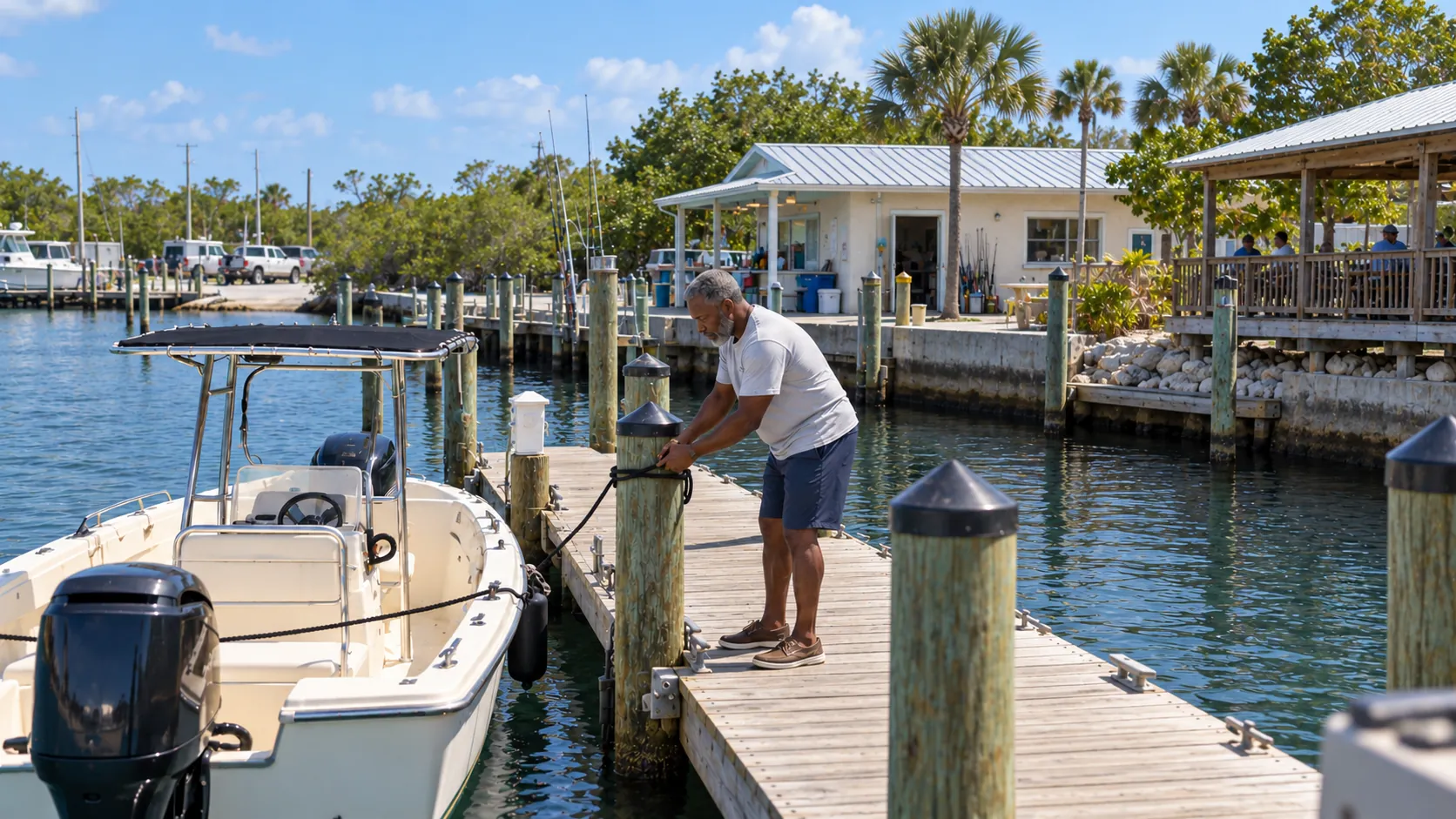
Commercial flood in the Keys
Marinas, resorts and restaurants in Islamorada and Key Largo.
Flood zones guide
Look up your zone and learn what AE, X and VE mean.

NFIP vs private flood
Limits, waiting periods and living expenses side by side.
Flood carrier directory
Companies that write flood insurance in Florida.