What is a wind mitigation inspection?
A wind mitigation inspection records building features that may reduce wind damage. The report may support insurance credits, but it does not promise a lower premium.
Quick answers
Sourced from Florida Statute §627.711 and OIR-B1-1802 form guidance. Last verified: August 2026.
What Is a Wind Mitigation Inspection, and Who Asks for One?
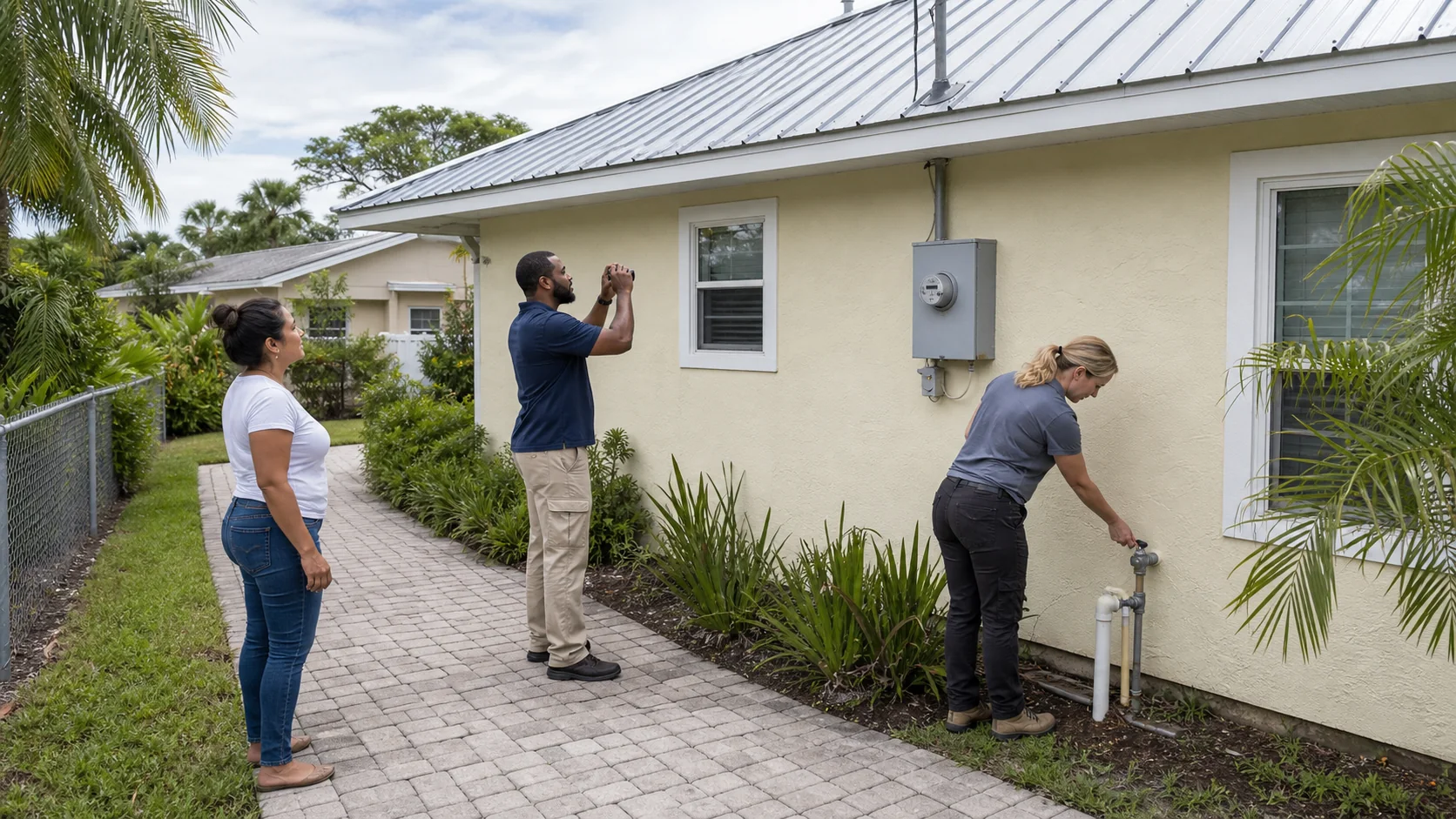
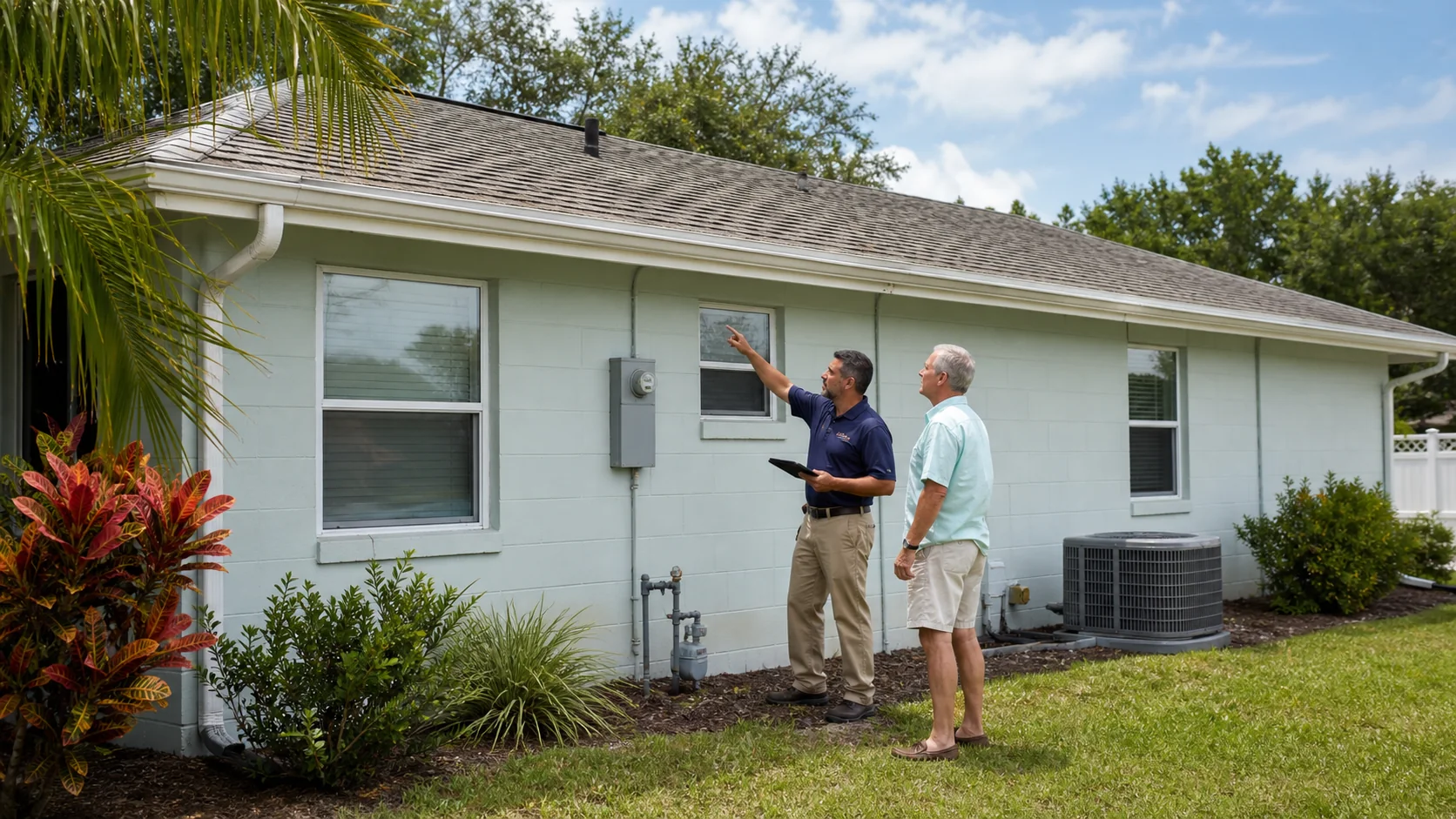
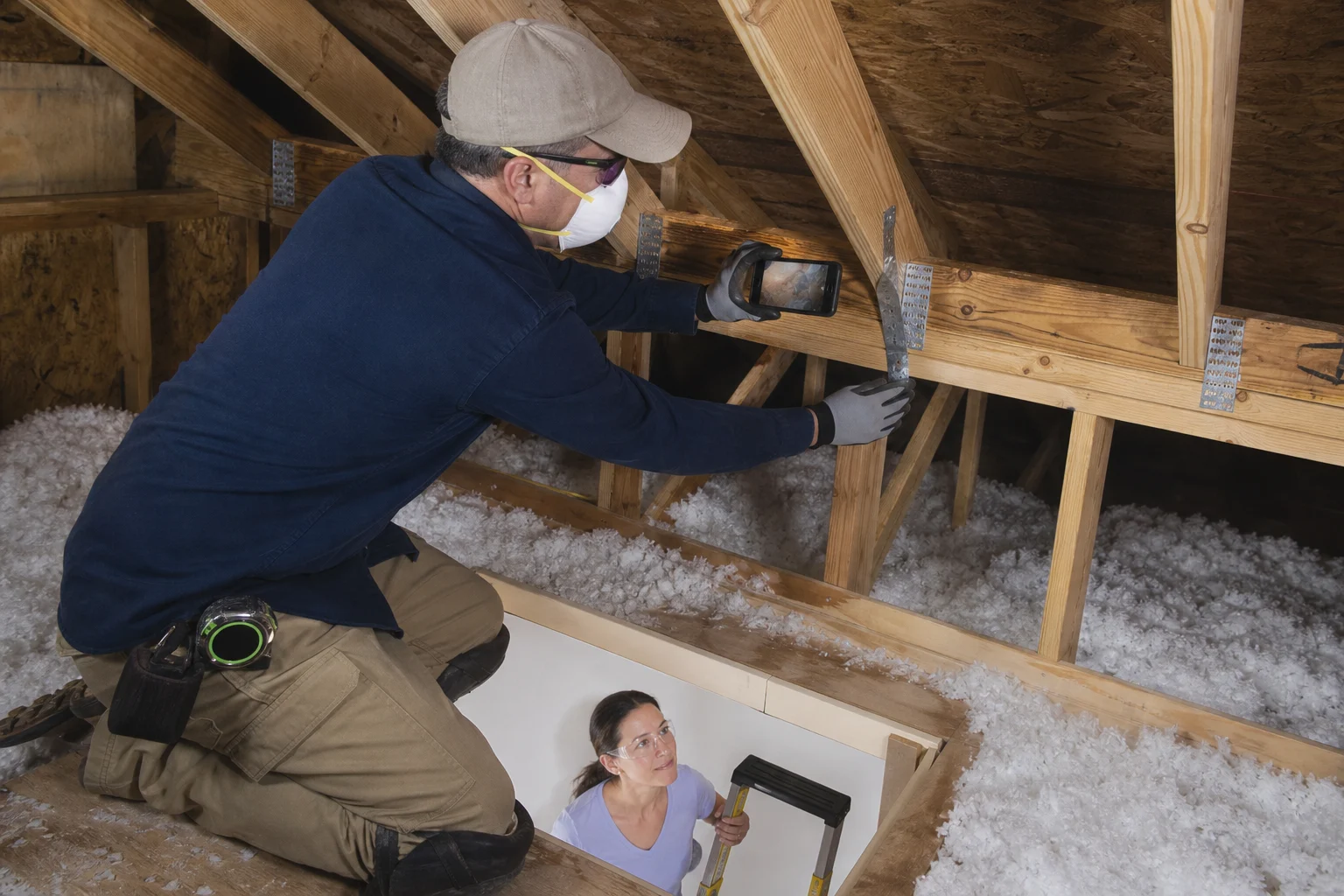
A wind mitigation inspection is a visual check, done by an authorized inspector. It records which hurricane-resistant features your home already has: the roof type, how the roof is fastened down, and how doors and windows are protected. Most homeowners order one to get the premium credits Florida requires insurers to offer (see below). A lender or carrier can also ask for one before binding or renewing a policy on an older home. The inspection takes 30 to 60 minutes. You don’t need to make any repairs beforehand. It just records what’s already there.
What Does the OIR-B1-1802 Form Actually Record?
The results go on one standardized form: the Uniform Mitigation Verification Inspection Form (OIR-B1-1802), created under Florida Statute §627.711. Every property insurer licensed in Florida must accept this exact form, so you don’t need a different report for each carrier. It has seven sections, but four carry the real financial weight: roof covering, roof deck attachment, roof-to-wall connection, and opening protection.
Roof Covering, Roof Deck Attachment, Roof-to-Wall Connection: What Each One Means
Roof covering records the roof material and whether it meets current Florida Building Code standards. This rating can improve any time you replace the roof. Roof deck attachment records how the roof deck (the plywood or OSB sheathing) is nailed to the trusses below: nail size, spacing, and sheathing thickness, checked from the attic. Roof-to-wall connection records how the roof structure ties to the tops of the walls. The weakest method is a toe-nail connection. Stronger methods use metal clips. The strongest use single or double wraps that tie all the way down.
Deck attachment and roof-to-wall connection are both largely fixed at construction. They rarely change without a full re-roof or structural retrofit.
What Is Opening Protection, and What Counts as Compliant?
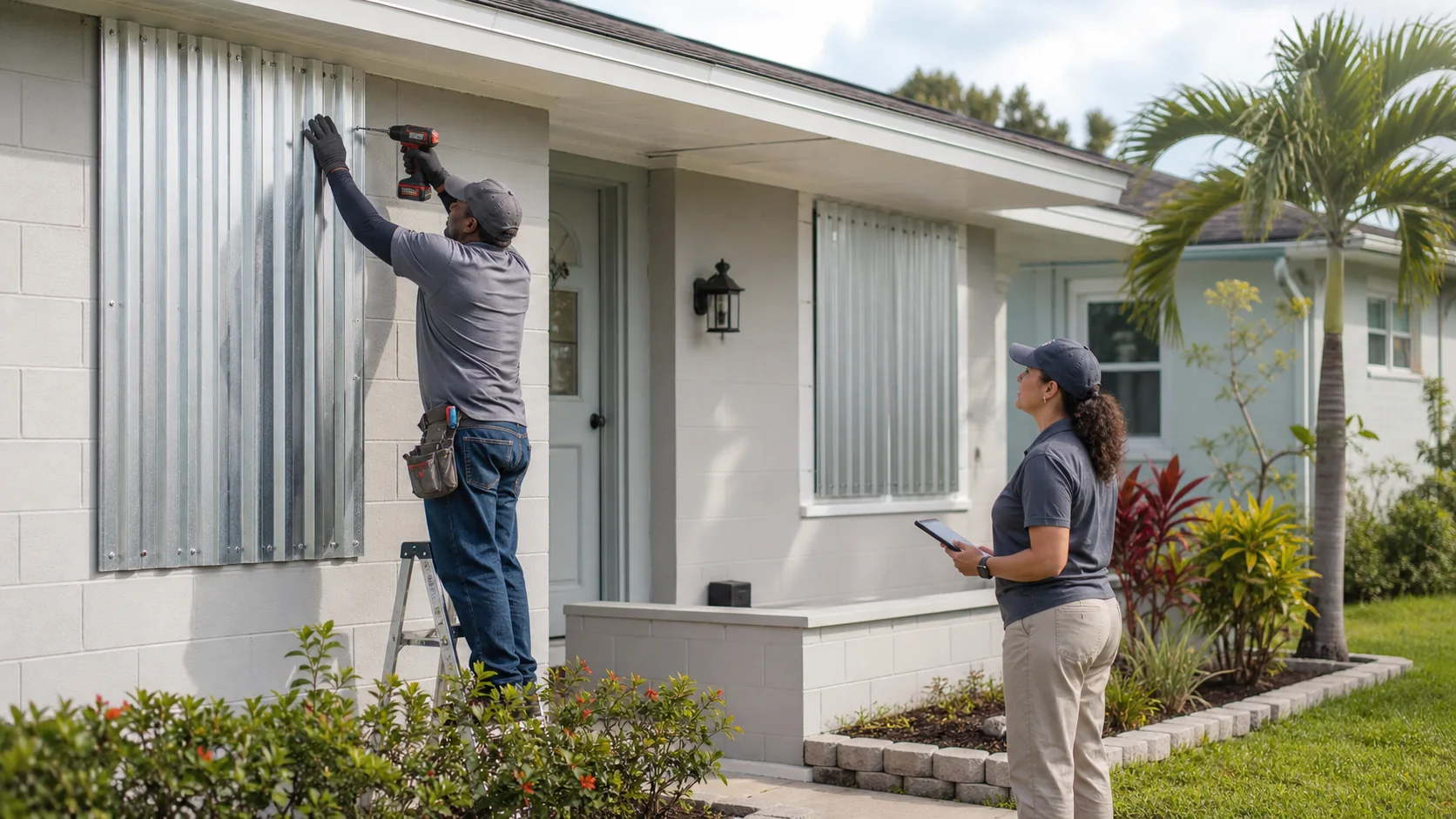
Opening protection records whether your windows, doors, garage doors, and skylights are protected from wind-borne debris, either with impact-rated glass or approved shutters that meet Florida Building Code standards. This section usually carries the single largest discount on the form. Once wind gets inside a structure through an unprotected opening, it’s a common way hurricanes cause interior damage. Partial protection, where some openings are covered and others aren’t, is credited differently than full protection. Covering every opening is what earns the largest credit.
How Long Is a Wind Mitigation Report Accepted For?
A completed OIR-B1-1802 is valid for five years from the inspection date, as long as no major changes are made to the structure and nothing on the form turns out to be wrong. The five-year clock is tied to the inspection date and the physical structure, not to who owns the home. A report done for a previous owner is still valid for a new owner for the rest of that five-year window.
How Much Can the Credits Change a Premium, and Who Applies Them?
Florida law requires every residential property insurer to offer premium credits that reflect the lower hurricane risk documented on the form. Insurers publish their own credit tables (often called forms OIR-B1-1699 or OIR-B1-1700) showing the range for each feature combination. You, or your agent, submit the completed OIR-B1-1802 to the insurer. The carrier applies the credits, usually at your next renewal or when you ask for it mid-term. The size of the discount varies by carrier and by which features your home has. Opening protection and roof-to-wall connection tend to move the number the most.
Where to Find a Report That's Already Been Done on Your Home
Before paying for a new inspection, check whether one already exists. Ask the seller or previous owner for their most recent OIR-B1-1802 if the home was inspected in the last five years. Ask your current or previous insurance agent whether one is on file. Check whether the inspection was done through the state’s My Safe Florida Home program, which keeps its own records. Some county property appraiser or building department offices also keep copies filed with permits.
 Need a specific insurance company?
Get a quote from your Florida-licensed agent
Share a few details about your home, and our team will follow up to review your request and explain the next step.
- Florida-licensed agent
- Help with all property types
- No obligation
- Quotes typically back within 24 to 48 hours
Frequently asked questions
Do I need to make repairs before a wind mitigation inspection?
No. The inspection is a visual check that takes 30 to 60 minutes and simply records what your home already has: the roof type, how the roof is fastened down, and how doors and windows are protected.
Which parts of the form can improve without structural work?
The roof covering rating can improve any time you replace the roof, and opening protection can improve by adding impact-rated glass or approved shutters to every opening. Roof deck attachment and roof-to-wall connection are largely fixed at construction and rarely change without a full re-roof or structural retrofit.
Why does opening protection usually carry the largest discount?
Because once wind gets inside a structure through an unprotected opening, it is a common way hurricanes cause interior damage. That is also why partial protection is credited differently: every window, door, garage door, and skylight has to be covered to earn the full credit.