Before requesting a home insurance quote
Accurate facts help the agent choose the right carrier program. They also lower the chance that a quote changes after review.
Quick answers
Documents to have in front of you
Start with paper you likely already have. Your current declarations page (the summary page of your existing policy, not the full contract) shows your carrier, coverage limits, deductibles and expiration date, and a new agent will ask for it to build an apples-to-apples comparison. If you’re buying a home, the seller’s existing policy or their most recent wind mitigation and four-point inspection reports can save you the cost of ordering new ones, since both are typically transferable if they’re still within their validity window. Have your closing disclosure or deed on hand for the purchase price and legal description, a copy of any permits pulled for major work (roof, electrical panel, plumbing, additions), and, if the home is in a flood zone, your flood insurance policy or an elevation certificate. None of this needs to be perfectly organized. A folder of PDFs or photos of the paperwork is enough for an agent to start pricing accurately instead of guessing.
What you need to know about the roof
Roof age and material are two of the single biggest rating factors in Florida, and they are also where quotes go wrong most often when a homeowner estimates instead of checking. Know the roof’s installation year (not the year you bought the house), its covering type (asphalt shingle, tile, metal or flat/built-up) and, if you have it, the permit number for the last full replacement. Many carriers set hard age cutoffs by material (commonly in the 15-20 year range for shingle roofs, longer for tile and metal) and will either decline or require a roof inspection past that age, so knowing where your roof falls relative to those cutoffs before you ask for a quote avoids a surprise mid-process. If you have a recent wind mitigation inspection, note what it says about roof deck attachment, roof-to-wall connections (clips vs. straps vs. toe-nails) and secondary water resistance. These directly affect your wind/hurricane premium and are worth having ready even though the agent can typically pull them from the report itself.
What you need to know about the plumbing, wiring and water heater
These three systems cause more declined applications than any other home feature, because they carry documented failure risks that carriers price around or refuse to write at all. On plumbing, know the pipe material: copper and PEX are broadly acceptable, but polybutylene (gray plastic pipe common in Florida homes built roughly 1978-1995) and Quest piping are treated as red flags by most carriers because both are prone to sudden, hard-to-predict failure as the material degrades internally. Most carriers require full re-piping before they’ll write a home with active polybutylene, and a handful may consider it only after their own inspection confirms the system is in good condition, so if your home has it, find out now rather than after underwriting flags it. On electrical, know your panel brand: Federal Pacific (Stab-Lok), Zinsco, Challenger and Pushmatic panels are widely declined across Florida carriers because their breakers have documented histories of failing to trip during an overload, overheating, or fusing in place. A panel brand mismatch is one of the fastest ways an otherwise-clean application gets rejected. Finally, know your water heater’s age and, if it’s a tank unit installed in an attic or upper floor, whether it has a drain pan: some carriers ask about this specifically because of water-damage claims history.
Facts about the home itself: what will you be asked?
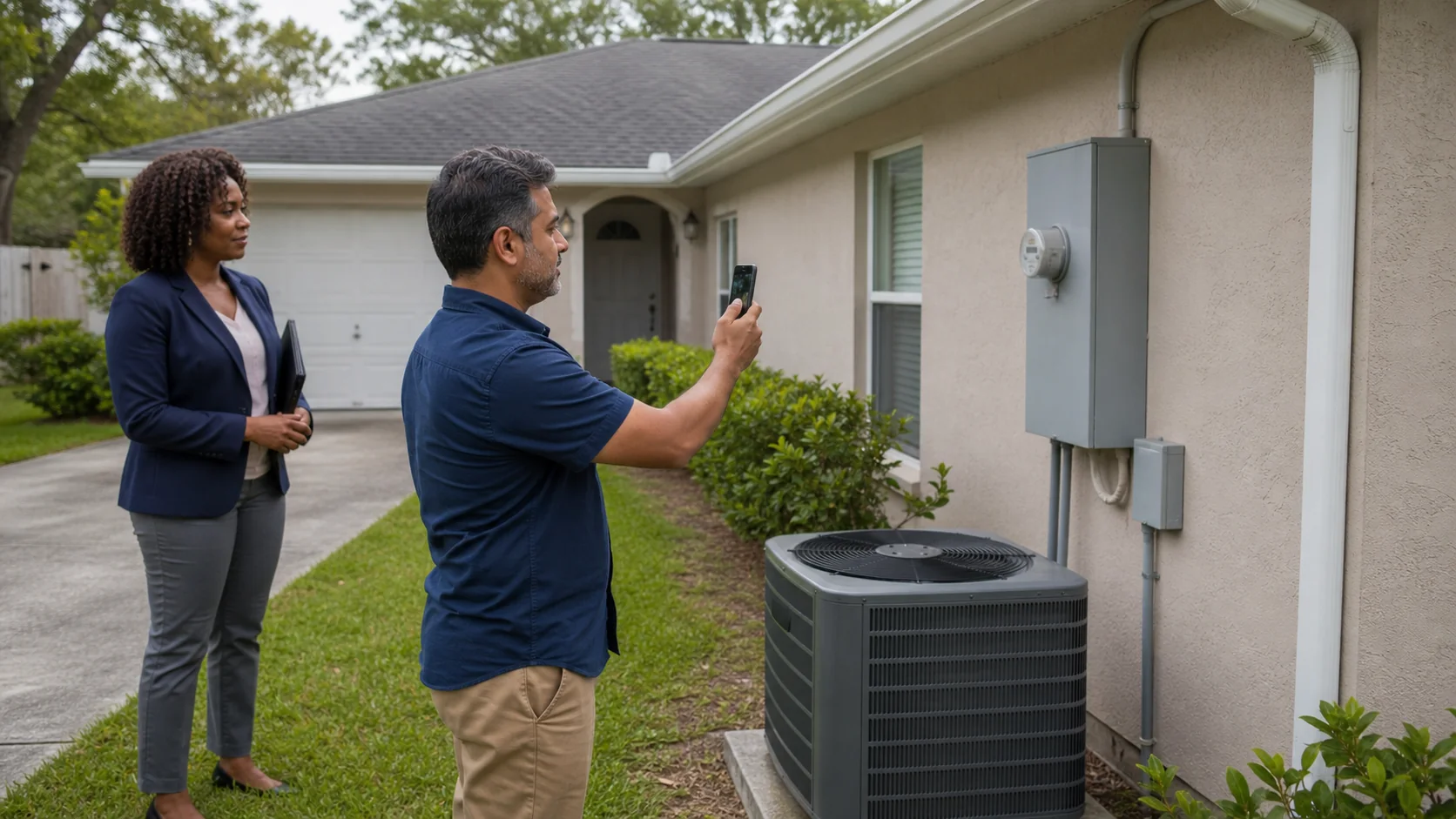
Have the basic property facts memorized or written down before you start: heated/living square footage, year built, number of stories, construction type (frame, masonry/block, or a mix), foundation type, and whether the home has a pool, screened enclosure, detached structures, or a home-based business. You’ll also be asked about occupancy (primary residence, seasonal/secondary home, or rental) since this changes the price and even which carriers are eligible to write the policy. If the home has any unique construction features (log, earth-berm, unconventional framing) or is on stilts/elevated construction common in coastal zones, flag that early, since it narrows the carrier list further. Square footage and replacement cost are related but not identical: an agent needs enough detail to run a replacement cost estimate (not market value) since Florida policies are written to rebuild the structure, not to match what you paid or what it would sell for.
Your claims and prior-insurance history: what to check first
Before you request quotes, pull your own CLUE report (Comprehensive Loss Underwriting Exchange). Consumers are entitled to a free copy once a year, similar to a credit report, and it shows the claims history tied to both you and the property for roughly the past seven years. Reviewing it yourself first means you won’t be caught off guard by a claim you forgot about (a small water damage claim from a prior owner, for instance, can still show up against the property). Also gather any non-renewal or cancellation notices from a prior carrier and know the reason stated on them, since carriers ask about this directly and an unexplained gap or vague answer slows underwriting down. If you’ve had zero claims, confirm that in writing from your current or most recent carrier when possible. A clean claims letter can support better pricing than a verbal claim of no losses.
What you want the quote to include before anyone runs it
Decide your target coverage before you get a number back, not after, so you’re comparing quotes on the same terms rather than comparing whichever limits each carrier defaulted to. At minimum, know what dwelling coverage (Coverage A) you want quoted, whether you want replacement cost or actual cash value on the roof specifically (many Florida policies now write roof claims on an ACV schedule regardless of what the rest of the dwelling coverage is), your preferred hurricane deductible and all-other-perils deductible, and whether you need water backup, mold, or scheduled personal property endorsements added rather than assumed. If you have a wind mitigation inspection and a four-point inspection (required by most carriers on homes over roughly 30 years old to document the roof, electrical, plumbing and HVAC systems), have both ready to hand over or reference. A quote run without them is usually a placeholder number that gets revised once the reports come in, not a final price.
Frequently asked questions
Do I need a four-point inspection before I get a quote, or can it come after?
Many carriers will issue a preliminary quote without one, but the price is often provisional until the inspection is submitted, especially on homes over about 30 years old. Ordering it early avoids a second, revised quote later.
Where do I get my CLUE report?
It’s available directly from LexisNexis, the company that compiles it, and consumers are entitled to a free copy each year. Ask for it before you start shopping, not after an agent requests it.
What if I don’t know my roof’s exact installation year?
Check the permit history with your county building department, or look for a roofing permit sticker in the attic or garage. A licensed roofer can also often estimate the age from the material and wear pattern if no paperwork exists.
Is polybutylene pipe automatically uninsurable?
Not automatically, but many carriers require additional review, re-piping documentation, or a water-damage exclusion for active polybutylene plumbing, and some may not offer coverage until it is replaced. Confirm the pipe material before you apply so you aren’t surprised mid-underwriting.
Does having a Federal Pacific or Zinsco panel mean no carrier will insure my home?
It rules out most, but not all, carriers, and typically the fix (a full panel replacement by a licensed electrician) resolves it. Some carriers will quote conditionally pending proof of replacement.
Should I get my own wind mitigation inspection or wait for the carrier to require one?
Get it yourself. The credits it can earn for hurricane-resistant features often lower the premium enough to cover the inspection cost many times over, and having it ready when you request quotes lets carriers price accurately from the start.
 Need a specific insurance company?
Get a quote from your Florida-licensed agent
Share a few details about your home, and our team will follow up to review your request and explain the next step.
- Florida-licensed agent
- Help with all property types
- No obligation
- Quotes typically back within 24 to 48 hours