
How does commercial flood insurance work in Florida?
Most business property policies leave out flood, so a shop, office, restaurant or condo building needs its own flood policy. Here’s what the NFIP covers for commercial buildings, where its limits stop, and when a lender will ask for it.
Quick answers
Sourced from FloodSmart.gov, FEMA’s NFIP summaries of coverage for commercial property and residential condominium buildings, and FEMA’s Community Rating System list. Last verified: October 2026.
Why Doesn’t Commercial Property Insurance Cover Flood?
A standard commercial property policy or business owner’s policy is written to leave rising water out, and FEMA’s guidance on business flood insurance says it plainly: most commercial insurance policies don’t protect against flood damage. That holds whether the water comes from a hurricane’s storm surge, an overflowing canal or a heavy summer rain that has nowhere to drain.
Flood coverage comes from a separate policy. You can buy it through the National Flood Insurance Program (NFIP), which FEMA runs and sells through insurance companies and agents, or from a private flood insurer. Business owners and renters in communities that take part in the NFIP can buy coverage, according to FloodSmart’s Flood Insurance 101.
How Much Does NFIP Commercial Flood Insurance Cover?
The NFIP insures commercial property under its General Property Form. FEMA uses it for non-residential buildings, residential buildings with five or more units, and condominium buildings with more than 25% non-residential occupants, plus the contents of those buildings. The limits, per FloodSmart and the NFIP summary of coverage for commercial property:
- Building coverage: up to $500,000. That includes the building and its foundation, electrical and plumbing systems, water heaters, central air conditioning and furnaces, permanently installed paneling, cabinets and bookcases, and walk-in freezers.
- Contents coverage: up to $500,000 for furniture and fixtures, machinery and equipment, and other property you own and use in the business, including stock (merchandise, raw materials and finished goods).
- Tenant improvements: if you lease your space, contents coverage can pay up to 10% of its limit for improvements you made to the building.
- Increased Cost of Compliance: up to $30,000 toward elevating, demolishing or relocating a flood-damaged building to meet local rules. Building and ICC payments together can’t pass $500,000.
Building and contents are bought separately and carry separate deductibles. The deductible comes out of the loss amount and doesn’t reduce your limit. If you own the building and run the business in it, you’d usually want both. If you lease, contents coverage is the piece that protects what you own.

How Does Flood Insurance Work for Condo Associations?
A condo association insures a residential building through the NFIP’s Residential Condominium Building Association Policy, called the RCBAP. According to FEMA’s summary of coverage for residential condominium buildings:
- Only a condominium owners’ association can buy it, and at least 75% of the building’s floor area has to be residential.
- The building limit is $250,000 times the number of units, and building losses are paid at replacement cost.
- If the building isn’t insured to at least 80% of its replacement cost, a co-insurance penalty cuts the claim payment.
- Contents coverage isn’t included automatically. The association has to ask its agent about adding it.
- It doesn’t pay for temporary housing, or for financial losses from business interruption or loss of use.
The RCBAP covers the building. FEMA notes that unit owners may want their own contents policies for what’s inside their units. A building where more than 25% of the occupants are non-residential, such as a mixed-use tower with ground-floor shops, goes on the General Property Form instead.
What Does NFIP Commercial Flood Leave Out?
An NFIP commercial policy pays for direct physical flood damage to the building and the things in it. The NFIP summary of coverage for commercial property lists what it won’t pay for under either coverage:
- Financial losses caused by business interruption or loss of use of the property. The policy won’t replace income while you’re closed.
- Property outside the building or in another structure, such as trees and plants. FloodSmart’s list adds landscaping, septic systems, decks and patios, fences and swimming pools.
- Currency, precious metals and valuable papers such as stock certificates, scrip and recorded data.
- Most self-propelled vehicles, including their parts.
- Moisture, mildew or mold damage the owner could have avoided.
- Sewer or drain backup, unless a flood in the area caused it.
Some buildings can’t get NFIP coverage at all. FloodSmart’s Flood Insurance 101 lists buildings below ground or entirely over water among those not eligible, along with Coastal Barrier Resources System areas. If your business sits on a pier or right at the shoreline, ask your agent to confirm eligibility before you count on a policy.
What Are Private and Excess Commercial Flood Insurance?
When $500,000 for the building or $500,000 for contents won’t rebuild and restock, business owners look past the NFIP. There are two main types:
- Private commercial flood insurance is written by private insurers outside the federal program. Each insurer sets its own limits, deductibles, waiting period and exclusions, so two policies can look very different.
- Excess flood insurance sits on top of an NFIP policy and pays after the NFIP limit runs out.
If losing income during a flood closure worries you, ask how any private policy you’re offered handles it, and read the policy wording itself. The private flood guide, the excess flood guide and the NFIP vs private comparison explain the trade-offs. The flood carrier directory lists companies that write flood insurance in Florida, including commercial flood.

Will Your Commercial Lender Require Flood Insurance?
If the building is in a high-risk zone, probably. FloodSmart’s Flood Insurance 101 says that under federal flood insurance law, homes and businesses in Special Flood Hazard Areas with mortgages from federally regulated, supervised and insured lenders are required to have flood insurance. Zones that start with A or V are the high-risk ones; the flood zones guide explains them.
FloodSmart adds that lenders typically require only the amount of the loan, up to the NFIP maximum. That can be well below what it would cost to rebuild your building and replace your equipment, so the lender’s minimum isn’t always enough for you. A lender can also require flood insurance outside a high-risk zone as a condition of the loan.
How Long Is the Waiting Period for Commercial Flood?
An NFIP policy usually takes effect 30 days after you buy it, according to FloodSmart. The exceptions:
- No wait if you buy flood insurance while making, increasing, extending or renewing a loan.
- No wait if you change your coverage while renewing your policy.
- A one-day wait if a FEMA map revision has just moved the property into a high-risk flood zone and you buy within 13 months of the revision.
In Florida, buy it before hurricane season. A policy bought once a storm is in the forecast probably won’t be in force when it arrives. A private policy may have its own waiting period, so check the policy.
How Does Commercial Flood Work in Florida Cities?
The NFIP rules above apply statewide. What changes from city to city is the flood risk and the flood discount. FEMA’s Community Rating System lowers NFIP premiums in communities that do extra floodplain work, and each city earns its own class. A few from FEMA’s current list, with the discount for policies in high-risk zones:
- Unincorporated Monroe County (including Key Largo): Class 3, 35%
- Naples and Islamorada: Class 5, 25%
- City of Miami: Class 6, 20%
- Fort Lauderdale: Class 7, 15%
Our local guides cover each area’s flood history and business concerns: Miami (condo associations and mixed-use buildings), Naples (retail, restaurants and HOA buildings), Islamorada and Key Largo (marinas, resorts and restaurants) and Fort Lauderdale (waterfront businesses).
Frequently asked questions
Does a business owner’s policy (BOP) cover flood?
Usually not. FEMA says most commercial insurance policies don’t protect against flood damage, so a business needs a separate flood policy from the NFIP or a private flood insurer.
What is an RCBAP?
The Residential Condominium Building Association Policy is the NFIP policy a condo association buys for a building that is at least 75% residential. It covers the building up to $250,000 times the number of units. It doesn’t cover unit owners’ belongings.
How much is commercial flood insurance?
It depends on the building, its flood zone and the coverage you pick. FEMA sets NFIP rates, so the NFIP price is the same from any agent for the same building and coverage, and your community’s CRS class can lower it. Private policies are priced by each insurer.
Does flood insurance cover my inventory?
NFIP contents coverage includes stock, meaning merchandise held for sale or storage, raw materials and finished goods, up to $500,000 per building. You buy it separately from building coverage.
Do I need flood insurance if I lease my space?
Your landlord’s building policy won’t cover your equipment, furniture or stock. You can buy NFIP contents coverage on its own, and it can also pay up to 10% of its limit for improvements you made to the space.
Is there a waiting period for commercial flood?
Yes. A new NFIP policy usually starts 30 days after purchase. There’s no wait if you buy it while making, increasing, extending or renewing a loan.
 Questions about your coverage?
Get a quote from your Florida-licensed agent
Share a few details about your property, and our team will follow up to review your request and explain the next step.
- Florida-licensed agent
- Help with all property types
- No obligation
- A licensed agent reviews your request and follows up directly
Where to go next
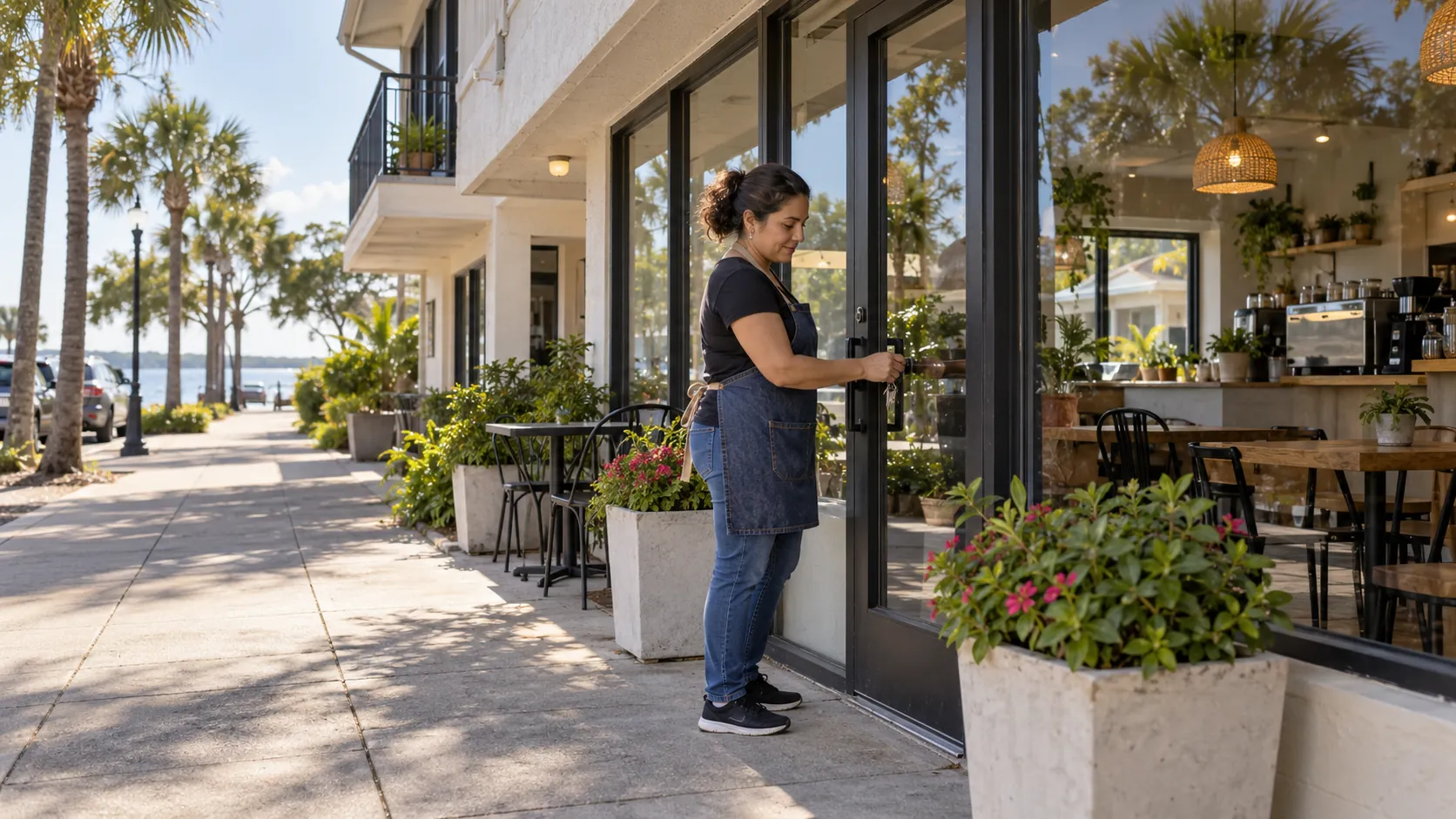
Miami commercial flood
Condo associations, mixed-use buildings and Miami’s flood discount.
Naples commercial flood
Retail, restaurants and HOA buildings after Hurricane Ian.
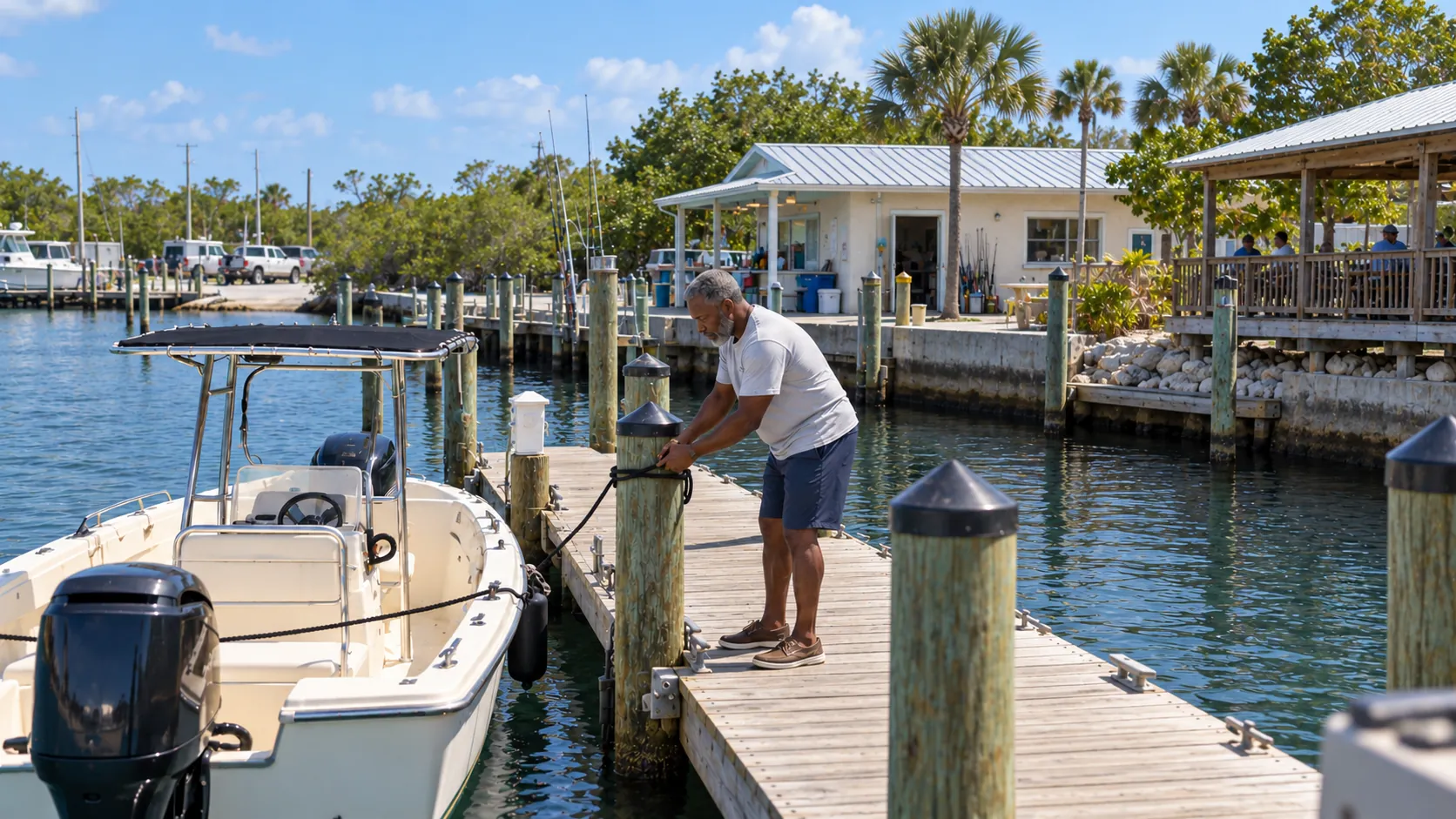
Florida Keys commercial flood
Marinas, resorts and restaurants in Islamorada and Key Largo.
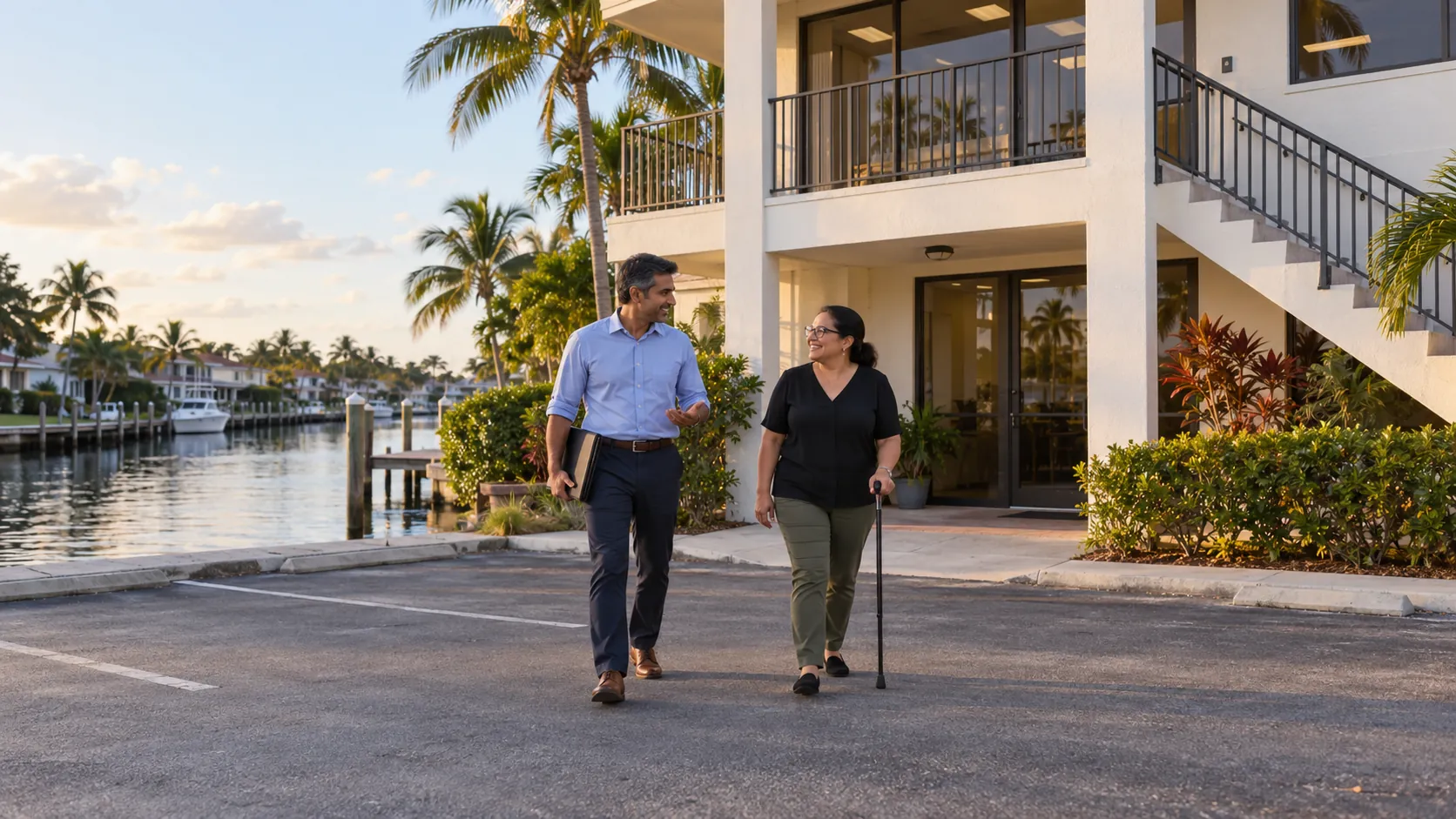
Fort Lauderdale commercial flood
Waterfront businesses, king tides and the April 2023 flood.